
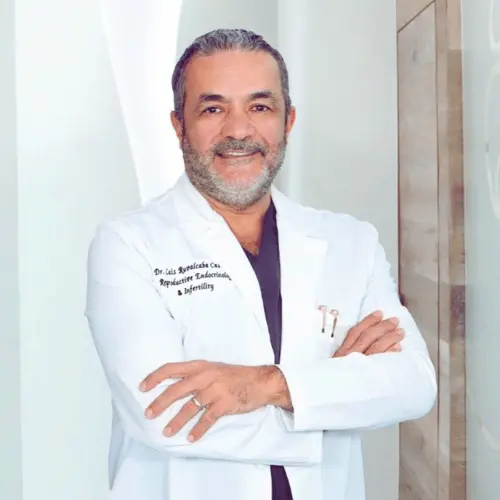
There are fertility clinics, and then there are practices that have spent four decades earning the trust of Austin women one difficult diagnosis at a time. Austin Area Obstetrics, Gynecology & Fertility — operating under the name Austin Area OBGYN & Fertility and also known historically as the Austin Endometriosis & Female Infertility Center — sits firmly in the second category. With more than 30 providers, over 100 years of combined clinical experience, and a Google rating of 4.9 out of 5 from more than 13,000 reviewers, this practice has become one of the most reviewed OB-GYN and fertility groups in Central Texas. That volume of feedback isn't marketing — it's a track record.
A Practice Built Around Women's Reproductive Complexity
The practice traces its roots to 1983, when Dr. Mark D. Akin, MD, FACOG, joined two of Austin's most respected OB-GYNs — Dr. Harold Brumley and Dr. Vernon Elledge — and launched what would grow into a multi-physician group focused on the full spectrum of women's reproductive health. Dr. Akin is no generalist: he received his medical degree from the University of Texas Southwestern School of Medicine (graduating in the top ten percent of his class and earning Alpha Omega Alpha honors), completed his OB-GYN residency at UT Southwestern Medical Center, and over the course of his career has participated in more than 100 FDA clinical trials — including studies specifically on endometriosis. That research background is unusual for a private practice and speaks to the clinic's seriousness about evidence-based care.
The group now operates under Dr. Akin's leadership as president, with a physician roster that spans OB-GYN generalists and advanced practitioners. Dr. Kathryn M. Landherr, MD, is among the named physicians — an Austin-area native who trained at UTMB, Texas A&M Health Science Center, and the University of Oklahoma for her residency, and who later completed a fellowship in Integrative Medicine with Dr. Andrew Weil. Her integrative background adds a dimension that's relatively rare in fertility-focused practices: a recognition that hormonal, metabolic, and lifestyle factors intersect in ways that purely procedural medicine can miss.
Endometriosis Care as a Core Competency
The word "endometriosis" in the clinic's original name is not incidental. Endometriosis affects an estimated 1 in 10 women of reproductive age and is one of the leading causes of infertility — yet it takes an average of seven to ten years to diagnose correctly in the United States. Austin Area OBGYN & Fertility positions the diagnostic workup itself as a first line of inquiry: during initial fertility evaluations, physicians review menstrual history specifically looking for patterns consistent with endometriosis, including dysmenorrhea (painful periods), irregular cycles, and pelvic pain.
When clinical suspicion is high, the practice moves to laparoscopy — an outpatient surgical procedure performed through small "band-aid" incisions that allows direct visualization and simultaneous treatment of endometrial implants. All of the practice's physicians are trained in minimally invasive surgery, which matters for patients who want a definitive diagnosis without the extended recovery of open surgery. The ability to diagnose and treat in a single outpatient setting — rather than referring out to a separate surgical specialist — is a genuine differentiator among OB-GYN groups in Austin.
Beyond endometriosis, the surgical scope includes hysterectomy, oophorectomy, correction of anatomical defects, treatment of ectopic pregnancy, fibroid surgery, and repair of adhesions. The common thread is laparoscopic technique: faster recovery, lower infection risk, and less disruption to surrounding reproductive tissue.
Fertility Services: Bridging the Gap Between OB-GYN and REI
One of the most practical advantages of Austin Area OBGYN & Fertility is where it sits in the fertility care continuum. Most OB-GYN practices can perform basic bloodwork and refer patients to a reproductive endocrinologist (REI) if anything looks off. This practice goes substantially further: it offers intrauterine insemination (IUI) in-office, conducts structured fertility evaluations that include menstrual cycle analysis and ovulation assessment, and can manage most infertility treatments without an immediate referral to a standalone IVF clinic.
That distinction matters financially and logistically. REI consultations in Austin can involve long waitlists, separate facility fees, and the psychological weight of feeling like you've "escalated" to a specialist. For many patients — particularly those with anovulatory cycles, mild endometriosis, or unexplained infertility — Austin Area OBGYN & Fertility can get them through a full diagnostic workup and several IUI cycles before IVF ever becomes a conversation. The practice explicitly operates fertility appointments seven days a week, 365 days a year, acknowledging that ovulation waits for no one's Monday-through-Friday schedule.
For patients who do eventually need IVF or other advanced assisted reproductive technologies, the practice provides the kind of thorough pre-treatment workup — including assessment of tubal patency, uterine anatomy, and ovarian reserve — that makes those referrals more efficient. To understand how IVF costs vary across Texas and what financial planning looks like before that step, it's worth reviewing state-level cost data before committing to a path.
What 13,320 Reviews at 4.9 Stars Actually Tells You
A 4.9-star rating is almost trivially easy to fake for a business with 50 or 100 reviews. At 13,320 reviews, it becomes statistically meaningful. At that scale, a 4.9 average means the overwhelming majority of patients are leaving five-star reviews, with very few leaving one or two stars — the negative reviews that would drag down the mean are simply not accumulating in proportion to the positive ones. For a medical practice dealing with reproductive health — where patients are often anxious, emotionally raw, and dealing with time pressure — that's a significant signal.
From available patient feedback, recurring themes include: physicians taking time to explain diagnoses without making patients feel rushed; nursing staff responding to portal messages within 24 to 48 hours with professionalism and compassion; and a general sense of being treated as individuals rather than throughput. Patients have specifically called out the experience of feeling "like family" and noted the attentiveness of care teams across multiple visits. Wait times appear occasionally in critical reviews — a reality in any high-volume multi-physician practice — but the pattern of feedback suggests these are exceptions rather than the norm.
For women navigating an Austin, TX fertility clinic search, the review volume alone makes this practice worth evaluating seriously. Most fertility clinics in Texas have a fraction of this feedback, which means patients choosing those clinics are making decisions with less data.
Location, Access, and the Practical Realities
The practice is located at 12200 Renfert Way, Suite 100, Austin, TX 78758 — a north Austin address that's accessible from major corridors including Burnet Road and US-183. For patients coming from Round Rock, Cedar Park, or other northern suburbs, the location is considerably more convenient than south Austin or downtown options. The main contact number is (512) 444-1414.
The scale of the practice — 30-plus providers spanning OB-GYN physicians, and advanced practitioners — means appointment availability tends to be better than at single-physician boutique fertility practices. For women trying to coordinate fertility appointments with work schedules and cycle timing, that flexibility is not a minor consideration.
How to Think About This Clinic in Your Decision
Austin Area OBGYN & Fertility is best understood as a high-volume, high-trust OB-GYN practice with genuine subspecialty depth in endometriosis and fertility. It is not a standalone reproductive endocrinology clinic — it does not offer IVF in-house — but for the significant population of fertility patients who are not yet at the IVF stage, or who want thorough diagnostic workup before committing to that expense, it offers a compelling combination of surgical expertise, fertility evaluation, and IUI capability under one roof. The endometriosis research background of its founder, the integrative medicine perspective of physicians like Dr. Landherr, and the unusually robust patient review history make it one of the more distinctive fertility-oriented practices in Central Texas.
If you're weighing your options, read our guide on how to choose a fertility clinic — particularly the sections on evaluating a clinic's surgical capabilities and its approach to the diagnostic workup before treatment.
Considering At-Home Insemination?
Not every fertility journey begins in a clinic. At-home intracervical insemination (ICI) is a lower-cost, private option that suits patients with no known fertility diagnosis — including single parents by choice, same-sex couples, and people who want to try a few cycles before committing to clinical treatment.
At-home insemination kits like those from MakeAMom come with step-by-step instructions designed for donor or partner sperm. Kits are a one-time purchase that can be reused until conception succeeds, require no clinic visit, and arrive in plain, discreet packaging. Many patients use them as a first step while working toward a fertility consultation — or alongside ovulation tracking while they wait for an appointment slot.
If you have a known fertility diagnosis, have been trying for 12 months without success (six months if you're over 35), or your physician has already recommended IUI or IVF, a board-certified reproductive endocrinologist is the right next step.
Frequently Asked Questions
Does Austin Area OBGYN & Fertility perform IVF in-house?
No. The practice offers fertility evaluations, ovulation induction, and intrauterine insemination (IUI) in-office, and can manage most infertility treatments without a referral to an outside specialist. However, patients who need in vitro fertilization (IVF) or advanced assisted reproductive technologies will typically be referred to a dedicated reproductive endocrinology clinic. The value of this practice is in its ability to diagnose thoroughly — including through surgical laparoscopy — and treat up to the point where IVF becomes necessary.
What makes this practice particularly well-suited for endometriosis patients?
The practice's founder, Dr. Mark Akin, MD, FACOG, has participated in over 100 FDA clinical trials including endometriosis studies — an unusual depth of research experience for a private OB-GYN group. All physicians are trained in minimally invasive laparoscopic surgery, which is both the gold standard for diagnosing endometriosis definitively and the primary treatment approach for endometrial implants. The ability to diagnose, stage, and surgically treat endometriosis in one practice — rather than bouncing between a gynecologist and a separate surgeon — is a practical advantage for patients who have already experienced long diagnostic delays.
How does the practice handle fertility appointments around cycle timing?
Austin Area OBGYN & Fertility sees fertility patients 365 days a year, including weekends and holidays. The practice explicitly acknowledges that fertility care is time-sensitive — ovulation monitoring, timed IUI, and hormone trigger shots cannot always wait for weekday office hours. This daily availability is a meaningful operational commitment that differentiates the practice from many conventional OB-GYN groups that treat fertility as a weekday-only service line.