
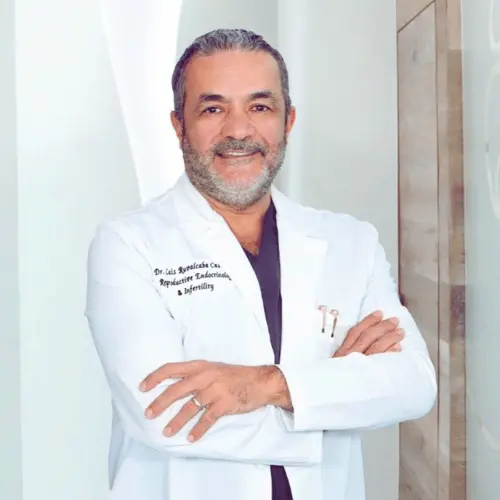
CCRM Boston, located at 300 Boylston St, Suite 300, in Chestnut Hill, Massachusetts, is the Boston-area location of CCRM Fertility — one of the most recognized names in reproductive medicine in the United States. Formerly known as Boston Reproductive Medicine, this practice joined the CCRM network and now operates under the CCRM brand, giving Boston-area patients access to the network's standardized clinical protocols, centralized laboratory quality programs, and nationally recognized physician faculty. The Chestnut Hill address places the clinic in a suburb that borders Newton and Brookline along the Route 9 corridor, offering convenient access from Boston's western neighborhoods and inner suburbs. Massachusetts patients can browse additional providers through the Massachusetts fertility clinic directory.
Physicians and Clinical Team
CCRM Boston's physician team reflects the network's emphasis on recruiting and retaining fellowship-trained reproductive endocrinologists with strong academic and clinical credentials. CCRM Fertility as a national organization has established itself through high success rate programs that emphasize single embryo transfer, comprehensive chromosome screening, and evidence-based protocol standardization. Physicians at CCRM locations hold board certification in reproductive endocrinology and infertility from ABOG and are typically active in clinical research and professional society leadership.
The multidisciplinary team at CCRM Boston includes reproductive endocrinologists, IVF nurses, embryologists, genetic counselors, and a patient care team experienced in supporting patients through emotionally and medically complex fertility journeys. CCRM's network structure also facilitates consultation with physicians at other CCRM locations for second opinions or specialized expertise, offering a breadth of resource that standalone practices cannot match.
Services and Treatments
CCRM Boston offers a comprehensive, full-cycle reproductive medicine program, including:
- Initial fertility consultation and comprehensive diagnostic evaluation
- AMH, antral follicle count, and ovarian reserve assessment
- Semen analysis and advanced male-factor testing
- Ovulation induction and monitored cycles
- Intrauterine insemination (IUI)
- In vitro fertilization (IVF)
- Intracytoplasmic sperm injection (ICSI)
- Preimplantation genetic testing for aneuploidy (PGT-A) and monogenic disease (PGT-M)
- Frozen embryo transfer (FET) with endometrial preparation protocols
- Egg freezing and embryo banking (fertility preservation)
- Donor egg cycles with fresh and frozen options
- Gestational carrier coordination
- Recurrent implantation failure evaluation
- Oncofertility consultation for patients facing cancer treatment
Laboratory and Success Rates
CCRM's reputation in the fertility industry rests in significant part on its laboratory excellence. The CCRM network has invested heavily in embryology quality control, culture media selection, incubator technology, and vitrification protocols. The network's One Day Workup diagnostic program is designed to compress the initial evaluation timeline — a meaningful advantage for patients who have delayed seeking care or are working against age-related time pressure.
The Boston location's laboratory operates under the same quality standards applied across the CCRM network, with outcomes data reported annually through the CDC and SART. CCRM's emphasis on elective single embryo transfer (eSET) is consistent with ASRM guidance and is associated with lower rates of high-order multiple pregnancies, which carry substantially elevated health risks for both patients and babies.
Patients should review the most current cycle-level data published by the CDC's ART Surveillance program and the SART Clinic Summary Report.
Patient Experience
The 300 Boylston St, Suite 300 address in Chestnut Hill is close to the Chestnut Hill Mall and accessible from the D line of the MBTA Green Line at Chestnut Hill Ave station — an important access point for Boston-area patients who rely on public transit. The location is also convenient from Newton, Brookline, Needham, Wellesley, and the western Boston neighborhoods. Parking is generally available in the Route 9 corridor, which is valuable for patients coming from the suburbs.
Boston is one of the country's premier medical hubs, and its fertility care community is correspondingly sophisticated. Patients at CCRM Boston tend to be medically well-informed and may arrive having researched their diagnosis extensively. The CCRM brand's national reputation also attracts out-of-state patients seeking high-success-rate programs for complex cases, including recurrent implantation failure and diminished ovarian reserve.
Considering At-Home Insemination?
Not every fertility journey begins in a clinic. At-home intracervical insemination (ICI) is a lower-cost, private option that suits patients with no known fertility diagnosis — including single parents by choice, same-sex couples, and people who want to try a few cycles before committing to clinical treatment.
At-home insemination kits like those from MakeAMom come with step-by-step instructions designed for donor or partner sperm. Kits are a one-time purchase that can be reused until conception succeeds, require no clinic visit, and arrive in plain, discreet packaging. Many patients use them as a first step while working toward a fertility consultation — or alongside ovulation tracking while they wait for an appointment slot.
If you have a known fertility diagnosis, have been trying for 12 months without success (six months if you're over 35), or your physician has already recommended IUI or IVF, a board-certified reproductive endocrinologist is the right next step.
Insurance and Financing
Massachusetts has one of the strongest infertility insurance mandates in the United States. Under Massachusetts General Laws Chapter 175, Section 47H, insurers must cover medically necessary fertility treatment for members who have been diagnosed with infertility. The mandate covers IVF, IUI, GIFT, ZIFT, and other ART procedures, and requires that covered employers (those with more than 25 employees) offer insurance that includes these benefits.
Massachusetts residents with qualifying insurance coverage may have most or all of their fertility treatment costs covered, subject to deductibles, copays, and annual or lifetime maximum benefits. Patients should review their specific plan carefully, as the mandate applies to state-regulated insurance products — self-insured employer plans (governed by federal ERISA law) may not be subject to the mandate. For patients whose plans do not cover fertility treatment, CCRM Boston's financial team can assist with third-party financing, pharmaceutical assistance programs, and multi-cycle package pricing. CCRM's network scale also allows for centralized financial counseling resources.
Frequently Asked Questions
What is CCRM's One Day Workup? CCRM's One Day Workup is a comprehensive diagnostic evaluation completed in a single day that includes a physical examination, transvaginal ultrasound, antral follicle count, ovarian reserve testing (AMH, FSH), uterine evaluation (saline sonogram or hysteroscopy), and semen analysis. The goal is to give patients and physicians a complete diagnostic picture quickly, reducing the time between seeking care and beginning treatment.
Does the Massachusetts infertility mandate cover IVF? Yes. The Massachusetts mandate explicitly covers IVF among other ART procedures when medically necessary. However, the mandate applies to state-regulated insurance products; if your employer self-insures its health plan (common among large companies), the plan may not be subject to state mandates. Patients should verify their coverage with their HR department or insurer before assuming coverage.
What does elective single embryo transfer (eSET) mean? eSET is the practice of transferring one embryo at a time rather than two or more. CCRM, like most major fertility centers, strongly advocates for eSET because it dramatically reduces the risk of twin and higher-order pregnancies — which carry substantially higher rates of premature birth, low birth weight, and maternal complications. When high-quality embryos are available, eSET success rates approach those of double embryo transfer with far better health outcomes.
Can I use CCRM Boston if I'm coming from outside the Boston area? Yes. CCRM Boston sees patients from throughout New England and occasionally from other parts of the country. For patients who live far from Chestnut Hill, the clinic can often arrange remote consultations for the initial discussion and coordinate local monitoring with a referring OB/GYN or fertility specialist, reserving visits to the clinic for key procedures such as egg retrieval and transfer.