
Carolinas Fertility Institute's Greensboro location is at 1002 N Church St, Suite 200, Greensboro, NC 27401, in downtown Greensboro near the intersection of Church St and Lindsay St. The practice website is at carolinasfertilityinstitute.com, the clinic holds a 4.2-star rating across 61 reviews, and it is listed among North Carolina fertility clinics. North Carolina does not have a state infertility insurance mandate, so cost planning is an important part of the treatment conversation for most patients at the Greensboro office.
Carolinas Fertility Institute is a multi-location practice serving the Piedmont Triad region of North Carolina, with Greensboro as a primary hub. The Piedmont Triad — anchored by Greensboro, Winston-Salem, and High Point — represents a large regional catchment area without the fertility clinic concentration found in the Research Triangle (Raleigh/Durham/Chapel Hill). CFI's Greensboro location serves patients from across Guilford County and neighboring Forsyth, Alamance, and Randolph counties who might otherwise face a two-hour drive to Triangle or Charlotte practices.
Physicians and Clinical Team
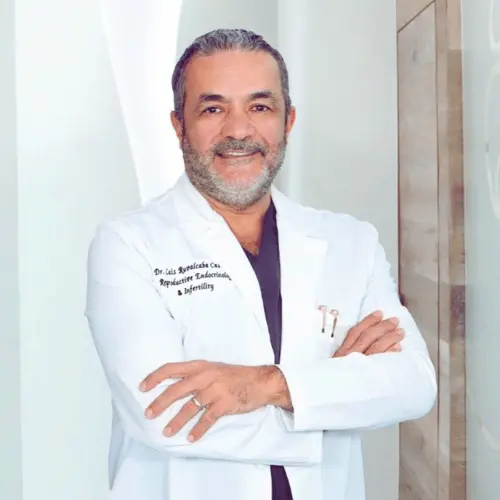
Carolinas Fertility Institute is led by board-certified reproductive endocrinologists holding ABOG dual certification in Obstetrics & Gynecology and in Reproductive Endocrinology & Infertility. ASRM membership and SART participation are maintained by the physician team, with SART requiring annual validation of ART cycle outcome data for public reporting.
The clinical team at the Greensboro location includes cycle coordinator nurses, embryology staff, and sonographers managing monitoring appointments during active stimulation cycles. As a multi-location regional practice, CFI coordinates physician and laboratory resources across its sites. Patients new to fertility treatment can review our guide to IVF treatment before their first consultation.
Services and Treatments
Carolinas Fertility Institute – Greensboro offers a comprehensive range of fertility services for the Piedmont Triad region:
- In vitro fertilization (IVF) with individualized controlled ovarian stimulation protocols
- Intracytoplasmic sperm injection (ICSI) for male factor infertility
- Intrauterine insemination (IUI) with or without ovulation induction
- Egg freezing (oocyte cryopreservation) for elective and medical fertility preservation
- Embryo cryopreservation and frozen embryo transfer (FET)
- Preimplantation genetic testing for aneuploidies (PGT-A) and monogenic disorders (PGT-M)
- Donor egg IVF coordinated through frozen egg banks and fresh donor programs
- Donor sperm services and therapeutic donor insemination
- Gestational carrier coordination
- Recurrent pregnancy loss evaluation and management
- Male fertility evaluation including semen analysis and sperm DNA fragmentation testing
- Ovarian reserve assessment (AMH, FSH, antral follicle count)
- Uterine evaluation via hysteroscopy and saline infusion sonography
- LGBTQ+ family-building services including reciprocal IVF and single-parent donor pathways
Laboratory and Success Rates
CFI's IVF laboratory supports in-house embryology including ICSI, extended blastocyst culture, trophectoderm biopsy for PGT, vitrification, and warming for frozen embryo transfer cycles. As a SART member, CFI submits cycle data annually for external review and publication in the SART Clinic Summary Report and CDC ART Surveillance database.
Patients should review the most current cycle-level data published by the CDC's ART Surveillance program and the SART Clinic Summary Report.
As a regional practice serving a less densely populated market than Charlotte or Raleigh, CFI's annual cycle volume may be smaller than urban programs. Patients should account for this when interpreting aggregate statistics — smaller volume clinics can still achieve excellent outcomes, but confidence intervals on their published percentages are wider due to smaller sample sizes.
Patient Experience
Patient reviews of Carolinas Fertility Institute – Greensboro describe a practice valued for physician accessibility and a personalized care experience that contrasts with larger urban medical centers. Reviewers frequently note that the clinical team communicates clearly and that the pace of appointments allows for thorough Q&A. For patients in the Piedmont Triad, CFI provides access to comprehensive IVF services without requiring a drive to the Triangle or Charlotte, which represents a significant logistical advantage.
The N Church St location in downtown Greensboro is parking-accessible and near several medical office buildings in the north downtown corridor. Patients coming from High Point, Burlington, Asheboro, or Winston-Salem describe the Greensboro location as centrally positioned within the regional commute network. CFI's multi-location model also means that certain procedures or physician consultations may sometimes be coordinated across sites for patients whose clinical needs warrant it.
Considering At-Home Insemination?
Not every fertility journey begins in a clinic. At-home intracervical insemination (ICI) is a lower-cost, private option that suits patients with no known fertility diagnosis — including single parents by choice, same-sex couples, and people who want to try a few cycles before committing to clinical treatment.
At-home insemination kits like those from MakeAMom come with step-by-step instructions designed for donor or partner sperm. Kits are a one-time purchase that can be reused until conception succeeds, require no clinic visit, and arrive in plain, discreet packaging. Many patients use them as a first step while working toward a fertility consultation — or alongside ovulation tracking while they wait for an appointment slot.
If you have a known fertility diagnosis, have been trying for 12 months without success (six months if you're over 35), or your physician has already recommended IUI or IVF, a board-certified reproductive endocrinologist is the right next step.
Insurance and Financing
North Carolina does not have a state infertility insurance mandate. Coverage for fertility treatment is determined by your employer's voluntary plan design or individual policy terms. Patients should review their plan's Summary of Benefits and Coverage and contact their insurer to confirm what diagnostic and treatment benefits apply, and whether prior authorization is required.
CFI's financial coordinators assist with insurance benefit verification and cost estimation. For patients without coverage, the practice offers information on multi-cycle pricing and third-party healthcare financing. Medication costs represent a major portion of IVF out-of-pocket expenses; CFI can advise on specialty pharmacy options and manufacturer assistance programs that may reduce drug costs. North Carolina residents who are employed by UNC Health, Duke Health, or other major health system employers may benefit from employer-sponsored fertility benefits that are offered voluntarily even in the absence of a state mandate.
Frequently Asked Questions
Does CFI serve patients from Winston-Salem and High Point, or primarily Greensboro? The Greensboro location at N Church St is the primary hub for the Piedmont Triad and serves patients from across the region, including Winston-Salem, High Point, Burlington, and smaller surrounding communities. CFI may also have satellite consultation days at other locations; patients should confirm with the scheduling team whether a location closer to them is available for certain appointments.
What is the referral process for patients who are initially seen by an OB/GYN? Patients are typically referred to a reproductive endocrinologist after a primary care physician or OB/GYN has performed an initial infertility evaluation — typically after 12 months of attempting to conceive (or 6 months for patients over 35). The referring OB/GYN should provide lab results, semen analysis, and any imaging to CFI at the time of referral. Patients can also self-refer to CFI without a formal referral in most cases.
Does CFI offer reciprocal IVF for same-sex female couples? Yes. Reciprocal IVF (also called partner IVF) is available for same-sex female couples in which one partner provides the eggs (undergoes egg retrieval) and the other partner carries the pregnancy. This allows both partners to participate biologically in the pregnancy. Donors sperm is used to fertilize the eggs in reciprocal IVF.
How do I know if I need IUI or IVF? The choice between IUI and IVF depends on the fertility diagnosis, the patient's age, ovarian reserve, and prior treatment history. IUI is generally recommended as a first-line treatment for unexplained infertility, mild male factor, or cervical factor, with up to three to six cycles attempted before escalating to IVF. IVF is typically indicated when IUI has not resulted in pregnancy, when tubal factors are present, for moderate-to-severe male factor, or when PGT is planned. The reproductive endocrinologist will recommend the most appropriate starting point based on your specific evaluation.