
CCRM Fertility's Boston-area location is at 300 Boylston Street, Suite 300, in Chestnut Hill, Massachusetts — in an affluent and medically active community just west of Boston along the Route 9 corridor. With a 3.7-star rating from 188 patient reviews, the clinic delivers CCRM network protocols to a Boston-area patient base that has exceptionally high expectations, shaped by the density of world-class academic medicine at institutions like Brigham and Women's, Beth Israel Deaconess, and Boston IVF. The clinic is explicitly LGBTQ+-inclusive. Massachusetts has a fertility insurance mandate — one of the strongest in the country — requiring most large-group insured plans to cover IVF, which is a major financial benefit for the large professionally employed patient population in the Boston metro. For a full directory of Massachusetts fertility providers, visit the Massachusetts fertility clinics directory.
Physicians and Clinical Team
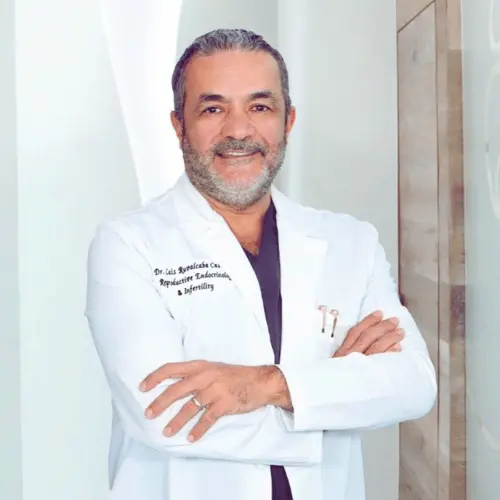
CCRM Fertility Boston is staffed by fellowship-trained reproductive endocrinologists who practice within the CCRM network's clinical framework. Physicians at this location bring the evidence-based protocols developed at CCRM's Lone Tree, Colorado flagship to the Boston market, including CCRM's approach to preimplantation genetic testing, single embryo transfer, and individualized ovarian stimulation. The Boston clinical market is among the most competitive in the country, and the CCRM name appeals to patients who want the backing of a nationally recognized network at a conveniently located Boston-area clinic. For current physician bios and scheduling, visit ccrmivf.com/boston or call (617) 449-9750.
Services and Treatments
- IVF with ICSI
- Frozen embryo transfer (FET)
- Preimplantation genetic testing (PGT-A and PGT-M)
- Egg freezing for elective and medical fertility preservation
- Embryo banking
- Intrauterine insemination (IUI)
- Donor egg IVF
- Donor sperm IUI and IVF
- Donor embryo cycles
- Reciprocal IVF for same-sex female couples
- Gestational carrier coordination
- LGBTQ+ family building pathways
- Diminished ovarian reserve protocols
- Recurrent pregnancy loss evaluation
- Male factor evaluation and semen analysis
- PCOS management
- Endometriosis and uterine factor assessment
- Oncofertility preservation
Laboratory and Success Rates
CCRM Fertility Boston operates within the CCRM network's laboratory framework. The Chestnut Hill location's embryology capabilities are aligned with CCRM's network standards for culture, vitrification, and PGT biopsy technique. Patients should request age-stratified live birth rate data at the consultation; in a market as data-literate as Boston, physicians are accustomed to detailed outcome discussions. Patients should review the most current cycle-level data published by the CDC's ART Surveillance program and the SART Clinic Summary Report.
Patient Experience
Chestnut Hill's Boylston Street address is on the Newton-Boston boundary, accessible from the Massachusetts Turnpike (I-90) and Route 9. The MBTA Green Line (D branch) has a Chestnut Hill stop near the clinic, making it accessible by subway from downtown Boston and the western suburbs. This transit access is meaningful for patients undergoing intensive monitoring cycles who may prefer not to drive every morning. The suburban Chestnut Hill setting offers the calm and convenience of a medical office environment outside the density of Boston's medical campus neighborhoods.
Boston is one of the most education-intensive metropolitan areas in the world — a city of universities, teaching hospitals, and research institutions. The patient population seeking fertility care in this market often includes graduate students, academics, physicians, and biomedical researchers who bring scientific literacy to their consultations and expect to engage with their care team at a high level of clinical detail. CCRM's emphasis on PGT data, single embryo transfer, and protocol rationale aligns well with this patient sensibility.
The LGBTQ+ community in Boston and Massachusetts is large, politically empowered, and well-protected legally. Massachusetts has been a leader in marriage equality and parentage law, and patients building families through assisted reproduction in this state have a supportive legal environment. CCRM Boston's inclusive clinical model serves this community without requiring patients to advocate for recognition of their family structure.
Considering At-Home Insemination?
Not every fertility journey begins in a clinic. At-home intracervical insemination (ICI) is a lower-cost, private option that suits patients with no known fertility diagnosis — including single parents by choice, same-sex couples, and people who want to try a few cycles before committing to clinical treatment.
At-home insemination kits like those from MakeAMom come with step-by-step instructions designed for donor or partner sperm. Kits are a one-time purchase that can be reused until conception succeeds, require no clinic visit, and arrive in plain, discreet packaging. Many patients use them as a first step while working toward a fertility consultation — or alongside ovulation tracking while they wait for an appointment slot.
If you have a known fertility diagnosis, have been trying for 12 months without success (six months if you're over 35), or your physician has already recommended IUI or IVF, a board-certified reproductive endocrinologist is the right next step.
Insurance and Financing
Massachusetts has one of the strongest fertility insurance mandates in the United States. The state requires large-group insured plans to cover IVF — including multiple cycles depending on age and diagnosis — as well as egg freezing for medical reasons, embryo cryopreservation, and related services. This mandate applies to fully insured Massachusetts-regulated health plans; self-insured ERISA plans are exempt. For the large number of Boston-area employees covered by Massachusetts-regulated employer plans, the mandate dramatically reduces the financial barrier to fertility treatment. CCRM Boston's financial counselors are well-versed in the Massachusetts mandate landscape and can assist with benefits verification, pre-authorization, and out-of-pocket estimation. Patients without mandate coverage have access to financing options.
Frequently Asked Questions
How does Massachusetts' fertility mandate affect the cost of treatment at CCRM Boston? Massachusetts requires large-group insured health plans to cover IVF and related ART services. For eligible patients, this can mean that cycle costs — including medications and monitoring — are substantially covered, with patient responsibility limited to standard copays and deductibles under the plan. CCRM's billing team will verify your specific benefits and outline expected out-of-pocket costs before treatment begins.
How does CCRM Boston compare to Boston IVF or Brigham and Women's fertility programs? Boston IVF is the largest independent fertility practice in New England and has deep community roots. Brigham and Women's and MGH operate academic fertility programs with research missions. CCRM Boston brings the protocols of a nationally recognized IVF network to the market. The right choice depends on your diagnosis, preferences for clinic scale, and whether you value local community roots versus national network infrastructure. All three are SART members with publicly available outcome data.
Is the Chestnut Hill location accessible by public transit? Yes. The MBTA Green Line D branch stops at Chestnut Hill, within walking distance of the clinic. For patients commuting from downtown Boston or other Green Line communities, the train is a practical alternative to driving along Route 9 during busy periods.
Does CCRM Boston offer egg freezing for patients who are not yet ready to have children? Yes. Elective fertility preservation (egg freezing) is offered as a service at CCRM Boston. Massachusetts' fertility mandate may cover egg freezing for medical reasons (such as before cancer treatment); elective egg freezing is typically not covered under the state mandate but may be covered under some employer plans. Ask the financial counselors about your specific coverage.