
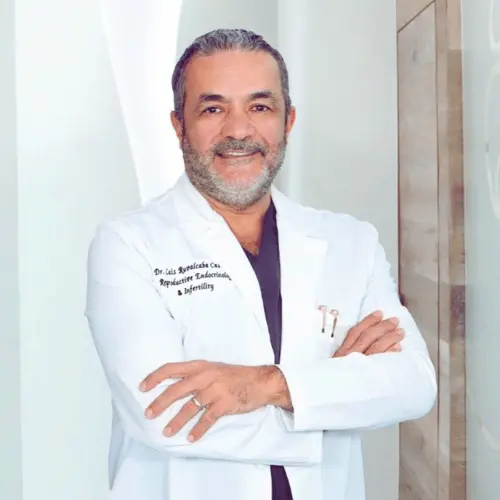
CCRM Fertility's Northern Virginia location is found at 8010 Towers Crescent Drive, Fifth Floor, in Vienna, Virginia — in the heart of the Tysons metro corridor, one of the most economically active office and medical districts in the DC region. The clinic carries a 3.7-star rating across 246 patient reviews, with many patients noting strong clinical expertise balanced against the challenges of coordinating care in a busy regional market. As a member of the national CCRM network, the Vienna clinic adheres to the same standardized protocols and laboratory practices that made the CCRM brand prominent in IVF nationally. Virginia does not have a state fertility insurance mandate, so patients should plan accordingly for out-of-pocket costs. See our Virginia fertility clinics directory for a full overview of REI providers across the Commonwealth.
Physicians and Clinical Team
CCRM Fertility Vienna is staffed by fellowship-trained reproductive endocrinologists who practice under the CCRM network's clinical framework, including its approach to preimplantation genetic testing, single embryo transfer, and endometrial preparation for frozen cycles. The clinical team includes board-certified REI physicians, nurses with IVF cycle coordination experience, and embryologists who follow CCRM's standardized laboratory protocols. The Northern Virginia market is medically competitive, and the Vienna team is positioned to serve patients from Fairfax County, Loudoun County, Prince William County, and the broader DC-Maryland-Virginia (DMV) metro area. For current physician names and subspecialties, visit ccrmivf.com/virginia or call (571) 789-2100.
Services and Treatments
- IVF with ICSI
- Frozen embryo transfer (FET)
- Preimplantation genetic testing (PGT-A and PGT-M)
- Egg freezing (elective and medical)
- Embryo banking
- Donor egg IVF
- Donor embryo transfer
- Gestational carrier coordination
- Intrauterine insemination (IUI)
- Recurrent pregnancy loss evaluation
- Diminished ovarian reserve protocols
- Male factor infertility assessment
- Endometrial receptivity testing
- Ovulation induction
Laboratory and Success Rates
The Vienna clinic's embryology laboratory operates under CCRM's network-wide standards for embryo culture, biopsy, and cryopreservation. Vitrification is the standard method for all embryo and egg freezing. The lab supports both genetic testing biopsies and routine IVF cycles. As with any ART practice, patients should ask for age-specific live birth rate data when planning a cycle. Patients should review the most current cycle-level data published by the CDC's ART Surveillance program and the SART Clinic Summary Report.
Patient Experience
The Towers Crescent Drive address sits adjacent to the Tysons corner business district and is accessible from Route 7, I-495, and the Silver Line Metro (Greensboro or Spring Hill stations are approximately a mile away). This makes the location functional for patients commuting from across the northern Virginia suburbs — whether from Falls Church, Reston, McLean, or further out in Loudoun County. Parking in the building garage is available for appointments.
Northern Virginia is home to a highly educated, internationally diverse population, and the CCRM Vienna location serves patients with widely varying backgrounds, family structures, and fertility histories. The Tysons area's density means that patients do not need to travel into Washington, DC proper for reproductive specialty care, a significant convenience given the region's notorious traffic. The clinic's afternoon and early-morning monitoring slots help patients schedule around federal government work schedules, a common consideration in this market.
The CCRM network's emphasis on PGT-A and single embryo transfer is particularly relevant for Northern Virginia patients, many of whom delay family building into their late thirties due to the region's demanding professional culture. The clinic's approach to embryo banking — accumulating multiple tested embryos before transfer — can be well suited to patients who want to maximize their options before proceeding.
Considering At-Home Insemination?
Not every fertility journey begins in a clinic. At-home intracervical insemination (ICI) is a lower-cost, private option that suits patients with no known fertility diagnosis — including single parents by choice, same-sex couples, and people who want to try a few cycles before committing to clinical treatment.
At-home insemination kits like those from MakeAMom come with step-by-step instructions designed for donor or partner sperm. Kits are a one-time purchase that can be reused until conception succeeds, require no clinic visit, and arrive in plain, discreet packaging. Many patients use them as a first step while working toward a fertility consultation — or alongside ovulation tracking while they wait for an appointment slot.
If you have a known fertility diagnosis, have been trying for 12 months without success (six months if you're over 35), or your physician has already recommended IUI or IVF, a board-certified reproductive endocrinologist is the right next step.
Insurance and Financing
Virginia does not have a state mandate requiring insurers to cover fertility treatments. However, federal employees covered under the Federal Employees Health Benefits (FEHB) program may have significant fertility benefits through certain FEHB plans — patients employed by the federal government should review their specific plan's fertility coverage. Virginia-regulated private plans are not required to include IVF coverage. CCRM Vienna's financial counselors can assist with benefits verification and help structure payment plans or multi-cycle packages for patients paying out of pocket.
Frequently Asked Questions
Is CCRM Vienna the same as CCRM's Washington, DC location? CCRM has multiple locations in the DC-Maryland-Virginia area. The Vienna clinic at Towers Crescent Drive is specifically designated to serve Northern Virginia patients. Each CCRM location is a full-service clinic; patients can ask about which location is most convenient and appropriate for their case.
Does CCRM Vienna see federal government employees? Yes. The Vienna location is well positioned to serve federal employees and contractors from across the Northern Virginia region. Federal employees should review their FEHB plan documents for fertility benefits, as some plans offer meaningful coverage.
What is the difference between PGT-A and PGT-M? PGT-A (preimplantation genetic testing for aneuploidy) screens embryos for the correct number of chromosomes — it is used broadly to select the most viable embryos for transfer. PGT-M (monogenic disease testing) screens for a specific inherited genetic condition when one or both parents carry a known gene variant. Your physician will recommend the appropriate test based on your history.
How does CCRM approach patients who have had failed cycles at other clinics? CCRM's network — including the Vienna location — sees a significant volume of patients who come after unsuccessful IVF cycles elsewhere. A thorough diagnostic review of prior cycle records, including stimulation parameters, embryo development data, and transfer history, is part of the consultation process. The physician will formulate a revised protocol where appropriate.