
Fertility Centers of Illinois — Buffalo Grove: An In-Depth Editorial Review
135 N. Arlington Heights Road, Suite 195 | Buffalo Grove, IL 60089 | (847) 215-8899 Network: Fertility Centers of Illinois (fcionline.com) | Rating: 4.7★ / 340 reviews
Buffalo Grove sits at the northern tip of Chicago's sprawling northwest suburbs, about 35 miles from the Loop and a short drive from the Lake County border. For patients in that corridor — from Palatine to Libertyville — the Fertility Centers of Illinois (FCI) Buffalo Grove location delivers big-network IVF infrastructure without a downtown commute. As one of nine Illinois outposts in the FCI system, the clinic combines on-site consultation and monitoring with access to a shared embryology laboratory, a robust donor-egg program, and a specialist roster that covers the full spectrum of reproductive medicine.
A Network Built on Four Decades of Illinois Fertility Care
FCI was founded in 1976 and has grown into one of the Midwest's most established reproductive endocrinology networks. The practice employs more than a dozen board-certified reproductive endocrinologists and has participated in the birth of more than 45,000 babies. Network membership in US Fertility — one of the country's largest fertility practice management groups — gives FCI locations access to shared laboratory technology, clinical research, and standardized protocols that smaller independent clinics cannot easily replicate.
That infrastructure matters. Embryology quality is a major variable in IVF outcomes, and centralized embryology labs under consistent oversight tend to perform more predictably than fragmented single-site operations. FCI reports its outcomes annually through the Society for Assisted Reproductive Technology (SART). Published 2023 SART data for FCI's River North IVF facility — the network's flagship reporting unit — shows live-birth rates of 43.4% per cycle start for patients under 35, 34.1% for ages 35–37, 19.9% for ages 38–40, and 9.0% for ages 41–42. For context on how age shapes outcomes, see our guide to IVF success rates by age.
Physicians at the Buffalo Grove Location
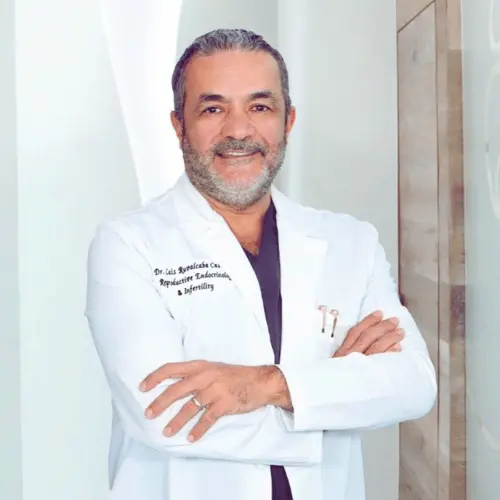
Two reproductive endocrinologists with long-standing ties to the Buffalo Grove location have earned particular recognition:
Dr. Laurence A. Jacobs, M.D. completed his reproductive endocrinology fellowship at the Mayo Clinic and has been named to Castle Connolly's America's Top Doctors list for 15 consecutive years — placing him in the top one percent of fertility specialists nationally. Dr. Jacobs has been based at FCI's Buffalo Grove office for much of his career.
Dr. Elie L. Hobeika, M.D. is also listed at the Buffalo Grove address and appears frequently in patient accounts for this location.
Dr. Karine Matevossian, D.O. serves the North Shore corridor and is associated with FCI's Vernon Hills office (the nearest satellite to Buffalo Grove), rounding out physician coverage for patients in Lake and northern Cook counties.
Dr. Allison K. Rodgers, M.D. is a board-certified reproductive endocrinologist with specialized expertise in LGBTQ+ fertility, reciprocal IVF, and transgender family-building. She holds the title of Director of Education at FCI and divides her clinical time between the Vernon Hills and Glenview locations — accessible to Buffalo Grove-area patients who seek her specific expertise.
What the Clinic Offers: Core Programs
IVF with and without PGT. FCI performs preimplantation genetic testing for aneuploidies (PGT-A) and structural rearrangements (PGT-SR) as standard add-ons to IVF cycles. Biopsied embryos are analyzed before transfer to improve per-transfer live-birth rates and reduce miscarriage risk — an approach that is increasingly standard of care for patients over 37 or those with recurrent pregnancy loss.
Donor Egg Program. FCI operates its own in-house egg donor database, meaning patients do not rely solely on external agencies. Donors undergo medical, genetic, STD, and psychological screening under FDA guidelines. The program also offers access to frozen donor eggs through Fairfax EggBank for patients who prefer a shorter timeline.
LGBTQ+ and Third-Party Reproduction. FCI's Center for Collaborative Reproduction was designed specifically for patients building families through egg donation, sperm donation, embryo donation, or surrogacy. Reciprocal IVF — where one partner provides eggs and the other carries the pregnancy — is a named specialty. The network also works with gestational carriers and has established protocols for single parents by choice.
Oncofertility. Patients facing cancer diagnoses can access urgent fertility preservation consultations, with expedited egg- and embryo-freezing cycles coordinated around treatment schedules.
Male Factor Services. FCI provides semen analysis, sperm banking, and coordinates with urologists for more complex male-factor workups including testicular sperm extraction (TESE).
Illinois's 2026 Fertility Insurance Mandate: What It Means for Buffalo Grove Patients
If there is one policy development that reshapes the calculus for patients at FCI Buffalo Grove, it is the expansion of Illinois's fertility insurance mandate, which took effect January 1, 2026.
Illinois was already one of the more IVF-friendly insurance states, but the new law closes the biggest loophole in the old framework. Previously, the mandate applied only to group plans with more than 25 employees. Starting in 2026, every group health plan in Illinois that provides pregnancy-related benefits must cover infertility diagnosis and treatment — including IVF — regardless of employer size. A 10-person startup and a 10,000-person corporation now face the same coverage obligation under state law.
The scope of mandated coverage is substantial:
- Covered procedures: IVF, embryo transfer, artificial insemination, GIFT, ZIFT, and preimplantation genetic screening
- Cycle limits: Up to 4 egg retrievals per patient; if a live birth results, 2 additional retrievals are covered, for a lifetime maximum of 6 retrievals
- Applicability: Fully insured group plans issued in Illinois, plus non-ERISA self-funded plans sponsored by Illinois public employers and school districts
One important caveat: self-funded ERISA plans (common at large national employers) are governed by federal law and are not required to comply with state mandates. Patients should confirm their plan type with their HR department before assuming coverage applies.
Even with that carve-out, the 2026 expansion is a meaningful shift. For patients at smaller employers — who previously had no mandate protection — the law effectively converts IVF from an out-of-pocket expense averaging $15,000–$20,000 per cycle into a covered benefit. To see how Illinois compares to other states, visit our fertility insurance by state guide. For a broader look at what IVF costs when insurance falls short, see our IVF cost by state page.
Considering At-Home Insemination?
Not every fertility journey begins in a clinic. At-home intracervical insemination (ICI) is a lower-cost, private option that suits patients with no known fertility diagnosis — including single parents by choice, same-sex couples, and people who want to try a few cycles before committing to clinical treatment.
At-home insemination kits like those from MakeAMom come with step-by-step instructions designed for donor or partner sperm. Kits are a one-time purchase that can be reused until conception succeeds, require no clinic visit, and arrive in plain, discreet packaging. Many patients use them as a first step while working toward a fertility consultation — or alongside ovulation tracking while they wait for an appointment slot.
If you have a known fertility diagnosis, have been trying for 12 months without success (six months if you're over 35), or your physician has already recommended IUI or IVF, a board-certified reproductive endocrinologist is the right next step.
Patient Experience and Reputation
FCI Buffalo Grove carries a 4.7-star rating across 340 reviews — a strong signal for a dedicated IVF center, where emotional stakes and clinical complexity can make patient satisfaction a polarizing metric. High ratings at fertility clinics tend to reflect consistent communication from the care team, clear protocols, and outcomes that meet or exceed expectations. A 4.7 across a meaningful volume of reviewers suggests that FCI Buffalo Grove has built a reliable experience at the north suburban level.
For patients comparing this location against other Illinois options, our Illinois fertility clinics directory includes outcome data and patient ratings for practices across the state. For a framework on making this decision, see our how to choose a fertility clinic guide.
The Bottom Line
FCI Buffalo Grove gives north suburban Chicago patients access to a physician team led by nationally recognized specialists, within a network that has the laboratory infrastructure, donor programs, and LGBTQ+ expertise to handle complex cases. The 2026 Illinois insurance mandate substantially changes the financial picture for patients on fully insured group plans — making now a reasonable time to initiate a consultation and understand what your specific coverage covers before starting a cycle.
Frequently Asked Questions
Which doctors practice at FCI's Buffalo Grove location?
The Buffalo Grove location is primarily associated with Dr. Laurence A. Jacobs, M.D. — a Mayo Clinic-trained reproductive endocrinologist and 15-time America's Top Doctors honoree — and Dr. Elie L. Hobeika, M.D. Patients seeking specialized LGBTQ+ or transgender fertility care can also access Dr. Allison K. Rodgers, M.D. (Director of Education at FCI) through nearby network locations in Vernon Hills and Glenview.
Does Illinois insurance now cover IVF at FCI Buffalo Grove?
As of January 1, 2026, Illinois requires all group health plans that provide pregnancy-related benefits to cover IVF and related infertility treatments, with no minimum employer-size threshold. Covered patients are entitled to up to 4 egg retrievals, with 2 additional retrievals after a live birth (6 lifetime maximum). This applies to fully insured group plans issued in Illinois. Self-funded ERISA plans are exempt from the state mandate; patients should verify their plan type with their employer's HR department.
What IVF success rates does Fertility Centers of Illinois publish?
FCI reports outcomes annually through SART. Published 2023 SART data for the FCI network shows live-birth rates of approximately 43% per cycle start for patients under 35, roughly 34% for ages 35–37, about 20% for ages 38–40, and around 9% for ages 41–42. Individual results vary based on diagnosis, embryo quality, and transfer protocol. For a full breakdown of how age affects outcomes, see our IVF success rates by age guide.