
Fertility Institute of Hawaii (Honolulu, HI): Patient Guide
Fertility Institute of Hawaii (FIH) is the state's largest and most established independent fertility practice, anchored at its main clinic at 1585 Kapiolani Boulevard in Honolulu and supported by satellite offices on Oahu, Maui, and the Big Island. Hawaii's geography shapes fertility care in ways that few other states experience: patients on Maui, Kauai, Molokai, Lanai, and the Big Island must travel — sometimes by interisland flight — to access a board-certified reproductive endocrinologist, making a Honolulu-based practice with genuine statewide reach an essential resource for the neighbor island population. FIH is that practice. Founded in 2008 by Dr. John Frattarelli, the clinic has grown to include three fellowship-trained reproductive endocrinologists and has participated in more than 30,000 fertility treatment cycles resulting in over 15,000 babies — a volume that puts FIH firmly among the highest-output fertility programs in the Pacific region. The clinic holds a 4.7-star rating from more than 130 patient reviews, a strong signal of sustained patient satisfaction across a practice that treats the full complexity of reproductive medicine.
Hawaii's fertility specialist landscape is small relative to its population. Outside FIH and a handful of other Honolulu-based practices, patients in the islands have limited options for IVF and other advanced reproductive technologies. For couples on the outer islands, FIH's network of affiliate offices in Kailua, Hilo, Kona, and Kahului reduces — though does not eliminate — the travel burden associated with monitoring appointments, while the core laboratory and retrieval procedures are performed in Honolulu. If you are comparing your options across the state, our guide to fertility clinics in Hawaii provides a broader overview of the programs currently operating in Hawaii.
Physicians and Clinical Team
FIH's clinical staff centers on three fellowship-trained, board-certified reproductive endocrinologists, a credential held by fewer than 1,500 active physicians in the United States. Reproductive Endocrinology and Infertility (REI) is a two-to-three-year subspecialty fellowship completed after a four-year OB/GYN residency, making REI-certified physicians among the most extensively trained specialists in medicine.
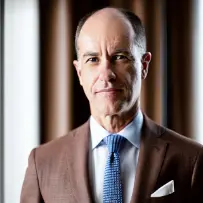
John L. Frattarelli, MD, HCLD is FIH's founder and serves as its Medical, Practice, and Laboratory Director. Dr. Frattarelli earned his undergraduate degree from Vanderbilt University and his medical degree from the University of Tennessee School of Medicine before completing his OB/GYN internship and residency at Walter Reed Army Medical Center in Washington, D.C. He then trained in Reproductive Endocrinology and Infertility at the National Institutes of Health in Bethesda — one of the most selective REI fellowship programs in the country. He is board-certified in both Obstetrics and Gynecology and Reproductive Endocrinology and Infertility, and holds the HCLD (High Complexity Laboratory Director) credential, meaning he carries formal regulatory authority over FIH's embryology laboratory — a dual role that few REI physicians hold. Prior to founding FIH, Dr. Frattarelli served for six years as Medical and Practice Director of the Tripler Army Medical Center IVF Institute in Honolulu and served as Clinical Research Director at Reproductive Medicine Associates (RMA) of New Jersey, one of the most research-intensive fertility programs in the United States. He holds academic appointments as Assistant Professor at the University of Hawaii John A. Burns School of Medicine and as Associate Professor at Rutgers University Robert Wood Johnson Medical School, and he has been named a Castle Connolly "Top Doctor" and featured in Honolulu Magazine's "Best Doctors" rankings continuously since 2009. He served as President of the Pacific Coast Reproductive Society in 2021–2022 and chairs the Society for Reproductive Endocrinology and Infertility Associates. His research output spans more than 200 national and international presentations and published manuscripts.
Anatte Karmon, MD, FACOG completed her medical training at the Medical School for International Health — a joint program between Columbia University and Ben Gurion University of the Negev — a curriculum that included clinical rotations in rural India and New York City. She completed her OB/GYN residency at Montefiore Medical Center (Albert Einstein College of Medicine) in the Bronx, where she served as Administrative Chief Resident. Dr. Karmon then pursued her REI fellowship at Massachusetts General Hospital / Harvard Medical School, one of the premier academic reproductive medicine programs in the country. She is board-certified in both OB/GYN and REI, and maintains surgical privileges at Kapi'olani Medical Center for Women and Children, Queens Medical Center, and Castle Medical Center. Her published research encompasses nutrition and fertility, male factor infertility, uterine fibroids, thyroid function, and cultural dimensions of infertility. She serves on the planning committee for the Pacific Coast Reproductive Society and has a particular clinical focus on egg freezing, diminished ovarian reserve, unexplained infertility, and PCOS.
Emily Goulet, MD, FACOG earned her medical degree from Texas Tech University Health Sciences Center and completed her OB/GYN residency at the University of Texas at Austin Dell Medical School. She completed her REI fellowship at the University of Alabama at Birmingham, a respected academic fertility program, before entering private practice in Texas where she also served as a Clinical Assistant Professor for Baylor University Medical Center. She returned to Hawaii and served as Clinical Assistant Professor at the University of Hawaii John A. Burns School of Medicine before joining FIH. Dr. Goulet is a member of the American Society for Reproductive Medicine (ASRM), the European Society of Human Reproduction and Embryology (ESHRE), and ACOG. Her clinical interests include PCOS, egg freezing and fertility preservation, weight-related fertility issues, single mothers by choice, and LGBTQ+ family building.
The advanced practice team includes Kaitlin Corbett, PA-C, Chandra Marsh, PA-C, Lyndsey Smith, APRN, and Jeongah Lee, APRN, who support cycle monitoring, patient education, and care coordination across FIH's Oahu and neighbor island locations.
Services and Treatments
FIH offers a comprehensive range of reproductive endocrinology and infertility services:
- In Vitro Fertilization (IVF) — full stimulation IVF with fresh and frozen embryo transfer protocols
- Intracytoplasmic Sperm Injection (ICSI) — single sperm injection for male factor infertility
- Accessible IVF with INVOcell — a lower-cost IVF option using intravaginal culture
- Natural Cycle and Minimal Stimulation IVF — reduced-medication protocols for appropriate candidates
- Intrauterine Insemination (IUI) — timed insemination for cervical factor, mild male factor, and unexplained infertility
- Ovulation Induction — oral and injectable medications to restore or regulate ovulation
- Preimplantation Genetic Testing (PGT) — chromosomal screening (PGT-A) and monogenic disease testing (PGT-M) prior to embryo transfer
- Egg Cryopreservation (Egg Bank of Hawaii) — elective fertility preservation and oncofertility banking
- Embryo Cryopreservation — long-term embryo storage and frozen embryo transfer cycles
- Sperm Cryopreservation (Sperm Bank of Hawaii) — banking prior to cancer treatment, vasectomy, or deployment
- Donor Egg IVF — fresh and frozen egg donor cycles
- Donor Sperm — insemination and IVF cycles using donor sperm
- Embryo Donation and Adoption — use of donated embryos from other patients' completed cycles
- Gestational Carrier / Surrogacy — full cycle management for intended parents and gestational carriers
- LGBTQ+ Family Building — inclusive services for same-sex couples and individuals
- Surgical Treatment — minimally invasive laparoscopic and hysteroscopic procedures for endometriosis, fibroids, polyps, and uterine septum
- Optimizing Natural Fertility — lifestyle, nutritional, and timing-based approaches for couples prior to or alongside treatment
- Oncofertility — fertility preservation consultations and banking for patients facing cancer treatment
- Fertility Wellness Program — integrative support during and between treatment cycles
Laboratory and Success Rates
FIH's embryology laboratory operates under the dual oversight of Dr. Frattarelli, who holds both the REI subspecialty board certification and the HCLD (High Complexity Laboratory Director) credential from the American Board of Bioanalysis. This credential requires passing a separate board examination covering laboratory science, quality management, and regulatory compliance — a standard that goes beyond the clinical training of a typical REI physician. The laboratory is accredited by the College of American Pathologists (CAP), one of the most rigorous laboratory accreditation programs available. Advanced technologies in use include time-lapse embryo imaging via EmbryoScope, which allows continuous non-invasive monitoring of embryo development without removing embryos from culture conditions, and comprehensive genetic testing platforms supporting both PGT-A (aneuploidy screening) and PGT-M (single-gene disorder testing).
FIH reports its IVF outcomes to SART (Society for Assisted Reproductive Technology), the professional body that collects, verifies, and publishes cycle-level outcome data from member clinics. SART data is submitted annually to the CDC for public reporting. Patients evaluating success rates should review FIH's current clinic-specific outcomes through SART's patient-facing portal and through the CDC Assisted Reproductive Technology reports, which allow age-stratified comparisons across all U.S. reporting clinics. FIH notes that its reported rates reflect all patients — including those with diminished ovarian reserve, advanced maternal age, and prior failed cycles — rather than a selected low-risk population, which is an important caveat when comparing aggregate numbers across programs.
The clinic has collectively helped over 15,000 patients achieve pregnancy across more than 30,000 treatment cycles since the founding physicians completed their fellowships.
Patient Experience
FIH's 4.7-star Google rating across more than 130 reviews reflects consistent patient satisfaction across a practice that treats some of the most emotionally complex cases in medicine. Recurring themes in patient feedback include attentive, personalized communication from the medical and nursing staff; physicians who take time to explain clinical rationale rather than simply issuing directives; and a general atmosphere patients describe as supportive and human rather than transactional.
For neighbor island patients — a group that is often underserved in specialty medicine — FIH's satellite office network in Kailua, Hilo, Kona, and Kahului provides meaningful convenience for baseline monitoring appointments and early-cycle ultrasounds. The core procedures (egg retrieval, embryo transfer, and IVF laboratory work) are performed in Honolulu, which means interisland travel remains a reality for patients outside Oahu. Patients from Maui, the Big Island, Kauai, and other islands are advised to plan for multiple Honolulu visits during an active cycle, typically concentrated around retrieval and transfer.
The clinic's international program — one of the few in Hawaii with a dedicated global patient service — also serves patients traveling from Japan, South Korea, Australia, and other Pacific Rim countries who travel to Honolulu for IVF treatment. For local patients, the clinic's breadth of services — including its own Egg Bank of Hawaii and Sperm Bank of Hawaii — means that most elements of a treatment plan, including donor coordination and fertility preservation, can be managed in-house.
Considering At-Home Insemination?
Not every fertility journey begins in a clinic. At-home intracervical insemination (ICI) is a lower-cost, private option that suits patients with no known fertility diagnosis — including single parents by choice, same-sex couples, and people who want to try a few cycles before committing to clinical treatment.
At-home insemination kits like those from MakeAMom come with step-by-step instructions designed for donor or partner sperm. Kits are a one-time purchase that can be reused until conception succeeds, require no clinic visit, and arrive in plain, discreet packaging. Many patients use them as a first step while working toward a fertility consultation — or alongside ovulation tracking while they wait for an appointment slot.
If you have a known fertility diagnosis, have been trying for 12 months without success (six months if you're over 35), or your physician has already recommended IUI or IVF, a board-certified reproductive endocrinologist is the right next step.
Insurance and Financing
Hawaii is one of a small number of states with a statutory IVF coverage mandate. A 1987 Hawaii state law requires health insurers to cover one IVF cycle when patients meet specified medical criteria. This mandate applies to Hawaii-based insurance plans, though federal self-insured employer plans (governed by ERISA) are exempt. Patients with Hawaii-based insurance coverage can expect out-of-pocket costs of approximately $3,000 to $6,000 per covered IVF cycle depending on co-pay and pre-payment obligations. Patients without insurance coverage should anticipate IVF costs in the range of $8,000 to $13,000 per cycle plus medications, which typically add $3,000 to $8,000 depending on protocol. Medicare, Medicaid, and Quest (Hawaii's Medicaid-equivalent) do not cover infertility services.
For patients without adequate insurance coverage, FIH offers several financing pathways:
- ARC Fertility — multi-cycle plans (One-Cycle Plus, Two-Cycle Plus, Three-Cycle Plus, Donor One-Cycle Plus, and a Success Program with refund options) through the nation's largest fertility financing network
- Future Family — monthly payment financing for fertility treatment costs
- CapexMD — a medical lending program designed specifically for fertility patients
- WINFertility — a fertility benefits management program that can help coordinate coverage and cost
Patients are encouraged to contact FIH's billing office at (808) 545-2800 to review insurance verification, prior authorization requirements, and the financing options best suited to their situation before beginning a treatment cycle.
Frequently Asked Questions
Does Fertility Institute of Hawaii treat patients from the neighbor islands? Yes. FIH operates satellite offices in Kailua (Oahu), Hilo, Kona, and Kahului (Maui) to support patients from across the state with monitoring appointments. Core procedures — including egg retrieval, embryo transfer, and laboratory work — are performed at the Honolulu clinic, so patients outside Oahu should plan for multiple trips to Honolulu during an active treatment cycle.
What is the difference between standard IVF and Accessible IVF with INVOcell at FIH? Standard IVF involves fertilizing eggs in a conventional laboratory incubator under controlled conditions. The INVOcell device is an intravaginal culture system that allows initial fertilization and early embryo development to take place inside the patient's own body. INVOcell was approved by the FDA as a lower-cost alternative to conventional IVF and may be appropriate for certain patients. During your consultation, FIH's physicians can help evaluate which IVF treatment approach is best suited to your diagnosis and goals.
Is FIH experienced with LGBTQ+ family building? Yes. FIH explicitly offers family-building services for LGBTQ+ individuals and couples, including same-sex female couples using donor sperm, same-sex male couples pursuing gestational surrogacy, and single individuals of any gender. Dr. Goulet in particular has a clinical interest in this area. The clinic's in-house donor sperm and gestational carrier coordination capabilities support these pathways without requiring patients to work with multiple separate providers.
How do I know if Hawaii's IVF insurance mandate applies to my plan? The Hawaii mandate covers state-regulated health insurance plans — most plans purchased through an employer based in Hawaii or through the individual market. Federal self-insured employer plans (common at large national companies) are exempt. The clearest way to determine coverage is to contact your insurance company directly and ask whether your plan is subject to Hawaii's IVF mandate and whether you meet the clinical criteria for coverage. FIH's billing team can assist with insurance verification as part of your new patient intake.