Gago Center for Fertility (Brighton, MI): Patient Guide
4.7 stars / 451+ reviews · Brighton, MI · gagofertility.com
Tucked into the rolling lakes country of Livingston County, Gago Center for Fertility sits roughly equidistant between Detroit and Lansing — making Brighton an unusually convenient hub for fertility patients across southeast and south-central Michigan. The practice serves patients from the Ann Arbor metro, the western Detroit suburbs, and communities along the I-96 corridor who want REI-level expertise without commuting to a large urban academic center. Founded in 2007 by Dr. Laura April Gago, the clinic has grown from a solo practice into a multi-physician team with three locations — Brighton, Lansing, and Ann Arbor — and a rating of 4.7 stars across more than 451 Google reviews. That longevity and reputation reflect nearly two decades of personalized, evidence-based fertility care in a region that historically lacked convenient access to reproductive endocrinology specialists.
Physicians and Clinical Team
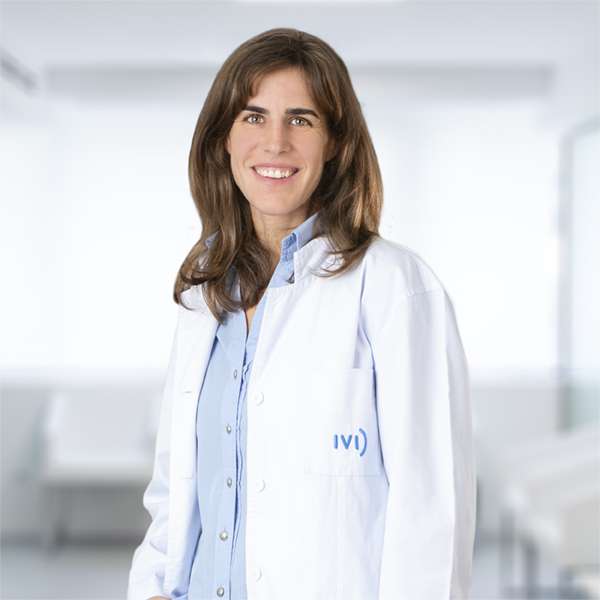
Laura April Gago, MD — Founder and Medical Director, is a board-certified reproductive endocrinologist and infertility specialist. Dr. Gago earned her medical degree from the University of California, San Diego, then returned to Michigan for her obstetrics and gynecology residency at the University of Michigan. She completed a three-year fellowship in reproductive endocrinology and infertility at Wayne State University in Detroit, where she subsequently accepted an assistant clinical professorship. Before launching the practice, Dr. Gago served as Medical Director of the University of Michigan IVF Program, where she developed both the Fertility Preservation Program and the Donor Oocyte Program — roles that shaped the breadth of services now available at Gago Center for Fertility. She is a Fellow of the American College of Obstetricians and Gynecologists (FACOG) and a member of the American Society for Reproductive Medicine (ASRM). Dr. Gago is also the founder of Laura's Hope, a nonprofit that provides grants for fertility treatment to patients who have experienced pregnancy loss, neonatal loss, or recurrent pregnancy loss.
Elizabeth Pritts, MD — Board-certified in Obstetrics and Gynecology, Reproductive Endocrinology and Infertility, and Minimally Invasive Gynecology, Dr. Pritts brings extraordinary credentials to the Brighton practice. She completed her OB/GYN residency at Yale University in 1998, a Gynecological Surgical Fellowship at Yale in 1999, and her REI fellowship at the University of California, San Francisco, in 2002. She previously served as an Instructor at Yale School of Medicine and as Assistant Professor of REI at the University of Wisconsin Medical School, and co-founded the Wisconsin Fertility Institute in 2007, serving as its Medical Director until 2024. During that tenure the practice earned recognition as one of the top 100 fertility practices in the United States in both 2023 and 2024, and Dr. Pritts has been named to the Best Doctors in America list continuously since 2009. She has authored more than 100 peer-reviewed scientific articles and lectured worldwide on reproduction and fertility. After selling her Wisconsin practice, Dr. Pritts reached out to Dr. Gago to continue caring for fertility patients part-time — a reunion of two long-respected colleagues.
Gwen Goodrow, MD — A board-certified reproductive endocrinologist and infertility specialist whose path to medicine began as an IVF laboratory technician in the early days of the technology. Dr. Goodrow earned her medical degree from the University of Toronto, completed a five-year OB/GYN residency at McMaster University in Hamilton, Ontario, and then a fellowship in reproductive endocrinology and infertility at the University of Vermont. She subsequently returned to McMaster as an Associate Professor, conducting research and caring for patients at the Hamilton Health Sciences IVF clinic, before joining one of Toronto's largest IVF practices as a partner for 14 years. Her work in that period included leading egg-freezing programs for fertility preservation, fresh donor-egg protocols, and adoption of vitrification. Dr. Goodrow joined Gago Center for Fertility after seeking an opportunity to serve patients in areas outside major metropolitan markets.
Shoshana Gruber, MSN, NP-C — Certified nurse practitioner rounding out the clinical team, supporting patients through monitoring cycles, medication instruction, and ongoing care coordination.
Services and Treatments
Gago Center for Fertility offers a full spectrum of reproductive medicine and adjunct wellness services:
- In vitro fertilization (IVF) — fresh and frozen embryo transfer cycles
- Intracytoplasmic sperm injection (ICSI) — for male-factor infertility
- Intrauterine insemination (IUI) — including with donor sperm
- Egg freezing (oocyte cryopreservation) — elective and medical fertility preservation
- Preimplantation genetic testing (PGT) — including PGT-M for monogenic/single gene defects
- Donor oocyte IVF — using fresh or frozen donor eggs
- Donor embryo transfer
- Donor sperm insemination
- Ovulation induction — for anovulatory and irregular-cycle patients
- Operative hysteroscopy — uterine cavity surgery
- Uterine cavity evaluation — saline infusion sonography and diagnostic hysteroscopy
- Tubal evaluation — hysterosalpingography (HSG) and related diagnostics
- Semen analysis and sperm cryopreservation
- Univfy Prediction Report — individualized IVF outcome modeling
- Wellness services — including Morpheus8, Morpheus8 Body, Morpheus 8V, BBL Broadband Light, Votiva, TONE body contouring, Hydrafacial, chemical peels, and hair reduction
The service breadth reflects Dr. Gago's stated philosophy of integrating evidence-based fertility care with complementary wellness programs under one roof — addressing the whole patient rather than the single diagnosis.
Laboratory and Success Rates
Gago Center for Fertility operates its own on-site IVF laboratory in Brighton, staffed by embryologists experienced in both fresh and frozen cycles. The lab employs vitrification for all cryopreservation — the rapid-freeze technique that has largely replaced slow-freeze methods and delivers significantly improved embryo survival rates on thaw. The laboratory supports PGT-M analysis, fresh donor-egg cycles, and reciprocal IVF for same-sex couples, reflecting a range of technical capability beyond routine IVF.
Gago Center for Fertility reports outcomes to SART (Society for Assisted Reproductive Technology). Because SART data is published with an approximately two-year lag, the most recently available figures at time of publication cover cycles performed in 2022. Prospective patients should request the clinic's own current performance data during their consultation and cross-reference it with the CDC ART Fertility Clinic Success Rates Reports, which publish independently verified cycle outcomes for every SART-reporting clinic in the United States. Given the practice's patient-centered, individualized protocol approach — rather than a one-size-fits-all stimulation model — outcomes are best evaluated in conversation with the clinical team in the context of your specific diagnosis.
Patient Experience
The 4.7-star Google rating across more than 451 reviews is notably high for a fertility clinic, a specialty where the emotional intensity of treatment can amplify criticism. Several consistent themes emerge from patient feedback:
Individualized treatment planning. A recurring phrase in positive reviews is that Dr. Gago "tailored my treatment plan to find what worked specifically for my body." Patients describe protocol adjustments across cycles rather than a static, repeated approach — a pattern consistent with a smaller, physician-led practice where the attending doctor remains closely involved in day-to-day decisions.
Physician accessibility and compassion. Multiple reviewers note that Dr. Gago personally called patients after losses to check in — a level of personal follow-through uncommon in larger practices. Dr. Pritts is consistently described as "calming," "kind," and "not rushing through anything." The warmth of both physicians and the nursing staff appears as a defining characteristic across years of reviews.
Success after prior failed treatment elsewhere. A notable subset of patients report coming to Gago after unsuccessful cycles at the University of Michigan or other large programs, and achieving pregnancy at Gago Center on subsequent attempts. While individual outcomes are not generalizable, the pattern suggests the practice takes on complex or previously failed cases rather than selecting only straightforward patients.
Nursing staff and scheduling. Patients specifically praise the nursing team's responsiveness, flexibility around work schedules for monitoring appointments, and willingness to answer questions thoroughly. For patients managing demanding jobs alongside a treatment calendar, this operational accommodativeness is practically meaningful.
Laura's Hope nonprofit. The grant program for patients who have experienced pregnancy or neonatal loss is mentioned positively in patient feedback as evidence of Dr. Gago's commitment to the broader community of those struggling to build families — extending beyond the transactional aspects of medical practice.
Considering At-Home Insemination?
Not every fertility journey begins in a clinic. At-home intracervical insemination (ICI) is a lower-cost, private option that suits patients with no known fertility diagnosis — including single parents by choice, same-sex couples, and people who want to try a few cycles before committing to clinical treatment.
At-home insemination kits like those from MakeAMom come with step-by-step instructions designed for donor or partner sperm. Kits are a one-time purchase that can be reused until conception succeeds, require no clinic visit, and arrive in plain, discreet packaging. Many patients use them as a first step while working toward a fertility consultation — or alongside ovulation tracking while they wait for an appointment slot.
If you have a known fertility diagnosis, have been trying for 12 months without success (six months if you're over 35), or your physician has already recommended IUI or IVF, a board-certified reproductive endocrinologist is the right next step.
Insurance and Financing
Michigan does not have a state fertility insurance mandate, meaning most commercially insured Michigan residents do not have a legal guarantee of IVF coverage. Coverage depends entirely on the specific plan design negotiated by your employer. Some large Michigan employers — particularly those self-insured under ERISA plans — have voluntarily added fertility benefits in recent years, but coverage is inconsistent and varies widely by employer. Patients should confirm their specific benefits, including whether IVF, IUI, diagnostic testing, and medications are covered, before initiating a treatment cycle. Gago Center for Fertility is reported to accept major commercial plans including Aetna, Blue Cross Blue Shield of Michigan, and United Healthcare, among others.
For patients without fertility coverage or with high cost-sharing, the practice offers several third-party financing pathways:
- Future Family — low-interest fertility-specific loans covering IVF, IUI, egg freezing, donor cycles, surrogacy, LGBTQ+ family building, PGT, and medications; pre-qualification does not affect credit score
- Prosper Healthcare Lending — immediate decisions for loans under $35,000, with longer terms available, no collateral required, and no prepayment penalties
- CapexMD — fertility-specialist lender offering customized loan programs with a dedicated fertility loan coordinator who works directly with the clinic to secure funds before treatment begins
- United Credit — financing available for IVF, IUI, donor eggs, surrogacy, egg freezing, fertility medications, and private adoption
Patients with prior pregnancy loss may also wish to inquire about the Laura's Hope grant program, which provides direct financial assistance for fertility treatment to qualifying individuals.
Frequently Asked Questions
Does Gago Center for Fertility treat LGBTQ+ patients and single parents? Yes. The practice offers reciprocal IVF, donor sperm insemination, donor oocyte IVF, and surrogacy coordination — services that support same-sex couples, single individuals, and gender-diverse patients. Financing partners including Future Family explicitly cover LGBTQ+ family-building expenses. For a broader overview of clinics serving this community, see fertility clinics in Michigan.
What makes Gago Center different from a large academic fertility center? The practice emphasizes individualized, physician-directed care in which the attending REI remains directly involved in protocol decisions — not delegated primarily to mid-level providers or rotating fellows. Multiple patients describe treatment adjustments after reviewing their specific response data, contrasting it with a more formulaic experience at larger centers. The trade-off is that wait times may be longer and appointment slots more limited during high-demand periods.
How does IVF work, and what cycle monitoring does Gago Center provide? IVF treatment involves ovarian stimulation with injectable hormones, egg retrieval under sedation, fertilization in the laboratory, embryo culture for three to five days, optional genetic testing, and transfer of a blastocyst-stage embryo to the uterus. Gago Center's laboratory handles all embryology in-house, including ICSI, extended culture, vitrification, and PGT-M testing. Monitoring typically requires multiple morning ultrasound and blood-draw appointments during stimulation; the nursing team works with patients to schedule these visits around work and family obligations.
Does the clinic have a nonprofit grant program for patients who have experienced pregnancy loss? Yes. Dr. Gago founded Laura's Hope specifically to provide fertility treatment grants for patients who have experienced pregnancy loss, neonatal loss, or recurrent pregnancy loss. Patients interested in applying should ask the front desk for current eligibility criteria and application information, as funding availability changes over time.