
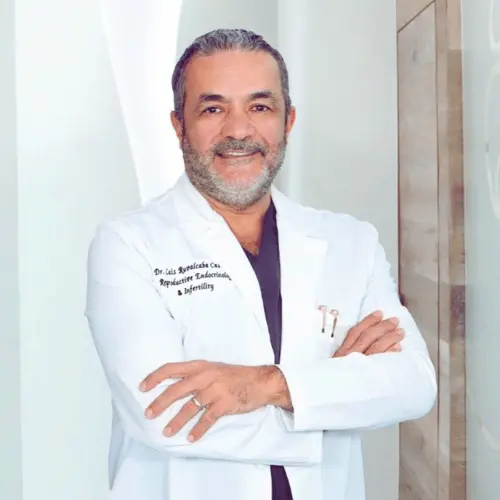
Houston Assisted Reproductive Technologies, PLLC (HART) is a fertility clinic located in Shenandoah, Texas — a small incorporated city within Montgomery County, situated directly north of The Woodlands along the I-45 corridor, approximately 30 miles north of downtown Houston. The clinic draws patients from The Woodlands, Conroe, Spring, Tomball, Magnolia, and other rapidly growing northern Houston suburban communities that have seen significant population growth over the past decade. For patients in these communities, HART offers specialist fertility care without navigating into Houston's more congested urban core. For a broader look at fertility options in the state, visit the Texas fertility clinics directory.
Physicians and Clinical Team
HART is organized as a Professional Limited Liability Company (PLLC) — a common entity structure for physician practices in Texas that combines the liability protections of an LLC with the professional licensing requirements applicable to medical providers. This entity structure is administratively relevant but does not affect the clinical model or patient experience.
The clinical team at HART is led by board-certified reproductive endocrinologists who have completed ABOG-accredited REI fellowship training. The Houston metropolitan area is one of the largest fertility markets in the United States, supporting numerous REI programs ranging from boutique practices to large multi-site networks. HART's Shenandoah location positions it as a convenient community-based alternative to downtown or Medical Center-based programs for patients in the northern suburban corridor.
Physicians trained in REI manage hormonal disorders, perform reproductive surgeries, direct IVF laboratory programs, and interpret complex multi-factorial infertility presentations. Supporting clinical staff include reproductive nursing coordinators, sonographers, embryologists, and patient financial counselors.
Services and Treatments
HART provides a full range of assisted reproductive technology services:
- IVF (In Vitro Fertilization) — individualized stimulation protocols with full laboratory IVF support
- IUI (Intrauterine Insemination) — natural-cycle and medicated for appropriate indications
- Egg Freezing — elective fertility preservation and oncofertility services
- Preimplantation Genetic Testing (PGT-A/PGT-M) — chromosomal aneuploidy screening and disease-specific embryo testing
- Frozen Embryo Transfer (FET) — natural-cycle and medicated protocols
- Donor Egg IVF — coordination with established egg donor agencies or known donors
- Donor Sperm Services
- Gestational Surrogacy — third-party reproduction coordination and legal referral
- Male Infertility Evaluation — semen analysis, hormonal panel, urological referral as appropriate
- Recurrent Pregnancy Loss Evaluation
- Reproductive Endocrine Management — PCOS, thyroid dysfunction, premature ovarian insufficiency
Laboratory and Success Rates
Texas is a large, competitive fertility market, and laboratory quality varies across programs. A well-equipped IVF laboratory in the Houston suburban market should include ICSI capability, vitrification of oocytes and embryos, extended blastocyst culture, and coordination with genetics laboratories for PGT analysis.
For patients in The Woodlands and northern Houston suburbs, having access to a local embryology laboratory — rather than needing to travel to the Texas Medical Center for egg retrieval — represents a meaningful quality-of-life advantage during treatment.
Patients should review the most current cycle-level data published by the CDC's ART Surveillance program and the SART Clinic Summary Report.
Patient Experience
Shenandoah and The Woodlands represent some of the fastest-growing communities in Texas, with a young professional and family demographic that maps closely to the typical fertility patient profile. The area's modern infrastructure, proximity to excellent medical facilities, and family-oriented community culture make it a comfortable setting for fertility treatment.
The northern Houston suburban market is accessible via I-45 and the Hardy Toll Road, and patients traveling from Conroe, Spring, Kingwood, or even outlying areas like Huntsville or Coldspring may find Shenandoah significantly closer than downtown Houston. Parking is plentiful, a meaningful practical advantage for patients attending frequent monitoring appointments during IVF stimulation.
Considering At-Home Insemination?
Not every fertility journey begins in a clinic. At-home intracervical insemination (ICI) is a lower-cost, private option that suits patients with no known fertility diagnosis — including single parents by choice, same-sex couples, and people who want to try a few cycles before committing to clinical treatment.
At-home insemination kits like those from MakeAMom come with step-by-step instructions designed for donor or partner sperm. Kits are a one-time purchase that can be reused until conception succeeds, require no clinic visit, and arrive in plain, discreet packaging. Many patients use them as a first step while working toward a fertility consultation — or alongside ovulation tracking while they wait for an appointment slot.
If you have a known fertility diagnosis, have been trying for 12 months without success (six months if you're over 35), or your physician has already recommended IUI or IVF, a board-certified reproductive endocrinologist is the right next step.
Insurance and Financing
Texas does not have a state IVF insurance mandate. The vast majority of Texas fertility patients pay out of pocket for IVF, or access treatment through voluntary employer-provided fertility benefits. IVF in the Houston market typically costs $12,000–$18,000 per cycle before medications.
Financing and cost-management strategies for Texas patients include:
- Third-party fertility financing — CapexMD, Prosper Healthcare Lending, and similar medical lenders
- Employer benefit review — Texas's major employers (energy, healthcare, technology sectors) vary significantly in fertility benefit offerings
- Multi-cycle IVF packages — discounted per-cycle pricing for two- or three-cycle commitments
- Shared-risk programs — where a higher upfront fee is charged but a refund is provided if no live birth results within the program's terms
- HSA/FSA — fertility expenses are qualified medical expenses under federal tax law
Frequently Asked Questions
How does The Woodlands / Shenandoah location compare to driving to the Texas Medical Center for IVF? For patients living in the northern suburbs, HART's Shenandoah location can save significant time during the 10–14 monitoring appointments required during a typical IVF stimulation cycle. Driving into the Texas Medical Center from The Woodlands during peak hours can take 60 to 90 minutes each way; Shenandoah's suburban location typically requires 15–25 minutes for most northern Houston area residents.
Does Texas have any state-level fertility protections for patients? Texas does not have an IVF insurance mandate. Texas law does have some provisions relevant to embryos and reproductive medicine, and patients pursuing surrogacy in Texas should consult with a Texas-licensed reproductive attorney. HART's team can provide referrals to appropriate legal resources.
What happens if I produce more embryos than I need for my family-building goals? Surplus embryos may be cryopreserved for future use (annual storage fees apply), donated to another patient (embryo adoption), donated to research, or allowed to be discarded. These decisions are documented in consent agreements at the time of the IVF cycle. Patients are encouraged to consider these options before beginning a cycle.
Are there any special considerations for patients in their early 40s seeking IVF at HART? Advanced maternal age is the most significant factor affecting IVF success rates. Women over 40 often have lower ovarian reserve and a higher rate of chromosomally abnormal embryos. PGT-A is particularly valuable in this age group to identify chromosomally normal embryos before transfer, which can improve transfer success rates and reduce miscarriage risk. A consultation will include ovarian reserve testing to help set realistic expectations.