
Innovation Fertility Preservation and IVF (Harrison, NY): Patient Guide
5.0 stars · Harrison, NY · fertilitypreservation.org
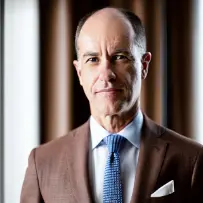
When oncologists need to refer a cancer patient for urgent fertility preservation, many turn to one name first: Kutluk Oktay, MD, PhD, FACOG. The founder and medical director of Innovation Fertility Preservation and IVF, Dr. Oktay is widely recognized as the world's leading authority on fertility preservation — the clinician who performed the world's first ovarian transplant with cryopreserved tissue, who pioneered specialized egg-freezing protocols for women with hormone-sensitive cancers, and who has published more than 200 peer-reviewed manuscripts in journals including the New England Journal of Medicine, Lancet, JAMA, and Science Translational Medicine. The Harrison, New York location gives Westchester County patients direct access to a clinician whose work has shaped international guidelines and whose laboratory continues to produce foundational research in ovarian biology. For anyone facing a cancer diagnosis who wants to preserve future fertility options — or for patients with complex reproductive challenges who have cycled elsewhere without success — Innovation Fertility occupies a category of its own.
Dr. Kutluk Oktay, MD, PhD: Credentials and Innovations
Dr. Oktay's academic and clinical credentials are exceptional even by the standards of reproductive endocrinology. He holds an MD from Hacettepe University Medical School in Ankara, Turkey, completed an OB/GYN residency at the University of Connecticut Health Service Center, pursued fellowship training in reproductive endocrinology and infertility at the University of Texas Health Science Center, and added a fellowship in reproductive biology at Leeds University School of Medicine in the United Kingdom. His PhD was conferred by the University of Ghent in Belgium — giving him formal graduate research training that complements his surgical and clinical expertise. He is board-certified in reproductive endocrinology and infertility and holds fellowship status in the American College of Obstetricians and Gynecologists (FACOG).
At Yale School of Medicine, where he serves as Professor Adjunct of Obstetrics and Gynecology and Director of the Laboratory of Molecular Reproduction and Fertility Preservation, Dr. Oktay maintains an active research program investigating the mechanisms of ovarian aging, chemotherapy-induced damage to ovarian reserve, and the molecular pathways that regulate follicle survival. His NIH-funded laboratory has received continuous federal research support for more than 20 years — a tenure that reflects the consistency and rigor of his scientific output.
Among his career milestones: he performed the world's first ovarian transplantation procedure using cryopreserved tissue, starting in 1999. He developed orthopic, heterotopic, and robotic ovarian transplant techniques — including a robotic method that achieves 100% ovarian function recovery in eligible patients. He also developed the NoPauze procedure, which uses ovarian tissue banking to extend the reproductive lifespan and delay menopause onset for women who want that option. The American Society of Reproductive Medicine recognized his contributions with its Distinguished Service Award in 2022, and he served as founding chair of the ASRM's Fertility Preservation Special Interest Group. From 2005 to 2025, he co-chaired the American Society of Clinical Oncology's Guidelines Committee on fertility preservation — work that directly influenced how oncology centers nationwide counsel patients about reproductive options before cancer treatment begins. Dr. Oktay's Yale profile lists his full publication record and current research focus areas.
Oncofertility and Fertility Preservation
Oncofertility — the specialty at the intersection of cancer care and reproductive medicine — is the defining focus of Innovation Fertility. The practice was built around the recognition that cancer patients face an urgent, time-sensitive window to preserve fertility before chemotherapy, radiation, or surgery compromises ovarian or testicular function. Most fertility clinics treat preservation as one service among many; at Innovation Fertility, it is the clinical core.
The preservation procedures available at the Harrison location reflect the full range of options appropriate for different diagnoses and timelines:
- Egg freezing using low-estrogen stimulation protocols designed specifically for patients with estrogen-sensitive cancers, including breast cancer and BRCA mutation carriers. Standard stimulation protocols raise estrogen to levels that can be contraindicated in hormone-sensitive malignancies; Dr. Oktay's modified approach minimizes that risk while still generating viable eggs for banking.
- Ovarian tissue freezing and transplantation — the most advanced option for patients who cannot undergo ovarian stimulation at all, including prepubertal girls, patients who must begin chemotherapy immediately, and those with certain cancer types. Tissue is retrieved laparoscopically, cryopreserved, and — when the patient is ready to pursue pregnancy — transplanted back using robotic surgical techniques that Dr. Oktay developed and refined.
- Embryo freezing for patients with a partner or willing to use donor sperm, creating banked embryos prior to cancer treatment.
- Testicular tissue freezing for male patients, including post-pubertal adolescents.
- In vitro maturation for cases where standard stimulation is not possible.
- Post-mortem emergency fertility preservation in urgent circumstances.
Dr. Oktay's early discovery that women carrying BRCA1 or BRCA2 mutations experience accelerated ovarian aging has had direct clinical implications: it means BRCA carriers benefit from earlier fertility counseling than the general population, regardless of whether a cancer diagnosis is yet present. The practice provides specialized guidance for this population as a distinct service, not simply a footnote to standard fertility care. The practice works closely with oncology teams to move preservation procedures forward without delaying cancer treatment — a coordination model honed over decades of practice in this space.
IVF and Reproductive Medicine Services
While oncofertility defines Innovation Fertility's national reputation, the practice also delivers the full spectrum of reproductive medicine for patients without a cancer history. Individuals and couples facing infertility — including those with diminished ovarian reserve, prior failed IVF cycles, recurrent pregnancy loss, or unexplained infertility — are served through the same clinical team that handles the most complex preservation cases.
Services include:
- IVF with personalized stimulation protocols, including specialized approaches for poor responders and patients with prior cycle failures elsewhere
- ICSI (intracytoplasmic sperm injection) for male factor infertility
- Preimplantation genetic testing (PGT) for chromosomal screening and single-gene disorder evaluation
- Intrauterine insemination (IUI)
- Donor egg and donor sperm cycles
- Gestational surrogacy coordination
- Tubal surgery and sterilization reversal
- Myomectomy and endometrioma removal for patients with structural factors affecting fertility
- Hysteroscopic procedures for uterine cavity abnormalities
The practice's experience with surgically complex cases — including robotic ovarian transplantation — means that patients who have been told their situations are beyond conventional management may find a genuinely different level of technical capability here. One patient reported arriving with a diagnosis of autoimmune oophoritis and years of failed fertilization attempts; after Dr. Oktay identified and treated the underlying condition, the patient froze multiple viable embryos and subsequently delivered a child with a second pregnancy underway.
Telehealth consultations are available, making it possible for patients outside the immediate Westchester area to receive a first evaluation before committing to travel for in-person care. See the IVF guide for a detailed explanation of IVF protocols, what to expect cycle by cycle, and how to evaluate success rate data.
Laboratory and Success Rates
Innovation Fertility's IVF laboratory produces outcomes that reflect the clinical precision applied to every stimulation and retrieval cycle. Published success rates from the practice show live birth rates of 75% for patients under 35, 50% for patients aged 35–37, 50% for patients aged 38–40, and 42.8% for patients aged 41–45. These figures represent strong performance, particularly in older age brackets where national averages typically decline more sharply.
The laboratory operates under the same scientific discipline that governs Dr. Oktay's research program. Vitrification — rapid flash-freezing of eggs and embryos — is used for all cryopreservation, and protocols are updated in line with evolving evidence rather than fixed to outdated standards. Patients who have previously frozen eggs or embryos at other programs and are planning a transfer cycle can arrange consultations to review prior records and determine whether existing banked material meets current quality standards.
Considering At-Home Insemination?
Not every fertility journey begins in a clinic. At-home intracervical insemination (ICI) is a lower-cost, private option that suits patients with no known fertility diagnosis — including single parents by choice, same-sex couples, and people who want to try a few cycles before committing to clinical treatment.
At-home insemination kits like those from MakeAMom come with step-by-step instructions designed for donor or partner sperm. Kits are a one-time purchase that can be reused until conception succeeds, require no clinic visit, and arrive in plain, discreet packaging. Many patients use them as a first step while working toward a fertility consultation — or alongside ovulation tracking while they wait for an appointment slot.
If you have a known fertility diagnosis, have been trying for 12 months without success (six months if you're over 35), or your physician has already recommended IUI or IVF, a board-certified reproductive endocrinologist is the right next step.
Insurance and Financing
New York patients with large-group employer health plans benefit from meaningful state-level coverage protections. Under New York's 2020 fertility insurance mandate, fully insured large-group plans — those covering 100 or more employees — must cover up to three IVF cycles per covered individual, along with related diagnostic services. This mandate applies to plans regulated by the state; ERISA self-funded plans, which cover many employees of large national corporations, are exempt, so patients should verify their specific plan type with their HR department before assuming coverage applies.
Fertility preservation services for cancer patients may be covered separately under medical insurance as a treatment complication of cancer diagnosis — distinct from the IVF mandate — and Innovation Fertility's team can assist in navigating that distinction with payers. For patients without insurance coverage for fertility treatments, the practice offers guidance on financing options and self-pay arrangements. The patient coordinator team is described by patients as attentive and detail-oriented, handling scheduling, billing questions, and prior authorizations with clear communication.
Compare costs and coverage across other fertility clinics in New York to benchmark what Innovation Fertility's services and pricing represent in the broader New York market.
Frequently Asked Questions
Who is Innovation Fertility best suited for?
The practice is especially well matched for patients facing cancer diagnoses who need fertility preservation before treatment begins, BRCA mutation carriers concerned about accelerated ovarian aging, patients who have had IVF failures at other clinics with unexplained causes, and anyone requiring advanced surgical fertility procedures such as ovarian tissue transplantation. Patients with straightforward infertility who want access to a research-active clinician with unusually deep expertise will also find the practice appropriate.
What is ovarian tissue transplantation, and am I a candidate?
Ovarian tissue transplantation involves surgically removing and cryopreserving strips of ovarian cortex before cancer treatment, then transplanting that tissue back — either to its original location or to an accessible site — once the patient is ready to attempt pregnancy. Dr. Oktay pioneered the technique starting in 1999 and has refined it through robotic surgical methods that achieve consistent functional outcomes. Candidacy depends on cancer type, treatment protocol, and age; patients with estrogen-sensitive cancers require case-by-case evaluation to determine whether the transplantation approach is safe.
Does the practice have multiple New York locations?
Yes. In addition to the Harrison location in Westchester County, Innovation Fertility operates offices at 245 Fifth Avenue and 7 West 51st Street in Manhattan, as well as locations in Greenwich and New Haven, Connecticut. Telehealth visits are available for initial consultations.
How does Dr. Oktay's care for BRCA mutation carriers differ from standard fertility care?
Dr. Oktay's laboratory discovered that BRCA mutations are associated with accelerated ovarian aging — meaning carriers lose ovarian reserve faster than average. This has two clinical implications: BRCA carriers benefit from earlier-than-standard fertility counseling, and egg-freezing protocols must account for both accelerated age-related decline and the need to minimize estrogen exposure during stimulation. Innovation Fertility addresses both factors with protocols designed specifically for this population rather than adapting general-use protocols after the fact. Visit fertilitypreservation.org to learn more or request a consultation.