
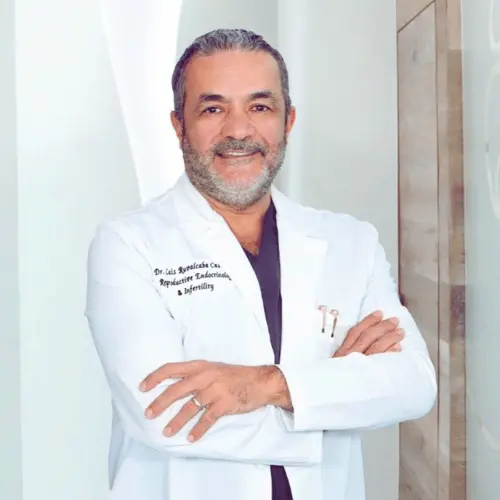
North Carolina Center for Reproductive Medicine (Cary, NC) — Fertlo Editorial Review
Rating: 4.3★ (490 reviews) | Location: 400 Ashville Ave, Suite 200, Cary, NC 27518 (Raleigh suburb) | Founded: 1992 | SART Member since: 1994
The North Carolina Center for Reproductive Medicine — universally known as NCCRM — holds a singular place in the state's fertility history. Founded in 1992 by three physicians who left academic medicine at UNC Chapel Hill, it was North Carolina's first private IVF center. More than three decades later it remains the Raleigh area's leading dedicated reproductive endocrinology practice: not an OB/GYN practice with an IVF add-on, but a specialty center whose entire infrastructure is built around fertility medicine.
Founding Physicians and Clinical Lineage
NCCRM was co-founded by Dr. Sameh K. Toma, M.D., F.A.C.O.G., Dr. Gerald Mulvaney, M.D., and the late Dr. Luther M. Talbert, M.D. Dr. Talbert was a UNC faculty member for 34 years, directed the university's IVF program, and is credited with the first successful IVF birth in North Carolina — an academic-grade embryology culture that his co-founders carried into a purpose-built private setting.
Dr. Sameh K. Toma, M.D., F.A.C.O.G. serves as Medical Director with more than 30 years of experience in reproductive medicine. He completed his M.D. and residency at UNC Chapel Hill and holds FACOG board certification. His B.S. in Electrical Engineering from NC State is not biographical color: Dr. Toma personally designed NCCRM's embryology laboratory on a semiconductor clean-room model, engineering air filtration to standards used in micro-electronics manufacturing — an evidence-based choice given embryo culture's sensitivity to air quality. He is also recognized nationally for tubal anastomosis (microsurgical tubal reversal).
The clinical team also includes Dr. Henny Liwan, M.D., F.A.C.O.G., who trained at Georg-August-University of Göttingen (Germany), completed her residency at Sparrow Health System/Michigan State University, and pursued fellowship training in Advanced Female Pelvic Surgery at Northwell Health. Her subspecialty focus covers endometriosis, hysteroscopic surgery, myomectomy, and fertility preservation — conditions that frequently require operative management before IVF can proceed. The laboratory is directed by Dr. Sammy Sun, Ph.D.
Satellite offices in Greensboro, NC extend access beyond the Raleigh-Durham corridor.
IVF Service Line and Laboratory
NCCRM's 2023 SART data (481 total cycles) shows outcomes by age group for patients using their own eggs:
- Under 35: 43.4% live birth rate — with a 92.9% elective single-embryo transfer (eSET) rate
- 35–37: 28.1% live birth rate
- 38–40: 20.5% live birth rate
- 41–42: 23.5% live birth rate
The 100% singleton birth rate and 87.9% full-term delivery rate reflect NCCRM's rigorous eSET (elective single-embryo transfer) discipline — prioritizing maternal and neonatal safety, the current SART/ASRM standard.
The clinic is credited with North Carolina's first ICSI and first PGD procedures. Today, PGT-A (Preimplantation Genetic Testing for Aneuploidy) screens embryos for chromosomal abnormalities before transfer, and NCCRM also offers PGT for family balancing — embryo sex selection for non-medical family composition purposes.
For how age affects outcomes nationally, see our IVF success rates by age guide.
Donor Egg Program
NCCRM maintains an in-house egg donor database, offering anonymous and known-donor arrangements. Donated embryo transfers in the 2023 SART data achieved a 60% live birth rate (3 of 5) — small sample but consistent with the clinical principle that donor-egg cycles outperform autologous cycles in older age brackets.
The clinic also facilitates gestational surrogacy, in which an IVF-created embryo is carried by a surrogate with no genetic relationship to the child. NCCRM does not perform traditional surrogacy — a legally meaningful distinction in North Carolina.
LGBTQ+ Family Building
NCCRM has built a dedicated LGBTQ+ family-building program that addresses the specific pathways available to same-sex and gender-diverse intended parents.
For female couples, NCCRM offers reciprocal IVF (co-maternity): one partner provides the eggs, the other carries the pregnancy. One partner undergoes ovarian stimulation while the other prepares her uterus; the child carries the genetic identity of the egg provider and the gestational history of the carrier. Not every clinic offers this as a practiced program.
For male couples, NCCRM coordinates IVF with gestational surrogacy and donor eggs. The practice's established donor database and surrogacy program support this pathway without requiring patients to source all parties independently.
Understanding the 4.3-Star Rating at a Dedicated IVF Center
A 4.3-star aggregate across 490 reviews requires context. NCCRM is not a general OB/GYN practice; nearly every patient is there because they cannot conceive without intervention. A 43% live birth rate for patients under 35 — competitive nationally — still means 57% of cycles did not succeed. Patients after a failed cycle review at higher rates than those who conceived and moved on; some emotional weight inevitably lands in the record regardless of clinical quality.
That framing does not excuse communication gaps or billing surprises — those are worth reading for. But 4.3 stars at a dedicated IVF center is a meaningfully different context than at a routine practice, and by the standards of high-volume IVF centers nationally, it is competitive.
North Carolina Has No Fertility Insurance Mandate
North Carolina has no state fertility insurance mandate. Whether you have IVF coverage depends entirely on your employer's plan design. Research Triangle employers — major universities, hospital systems, and tech companies — often offer voluntary fertility benefits, but nothing is guaranteed by law.
Out-of-pocket IVF in North Carolina typically runs $12,000–$18,000 per cycle including medications. NCCRM's financial team can verify coverage and walk through multi-cycle pricing before your first visit. See our IVF cost by state guide, the North Carolina fertility clinics directory, and our fertility insurance by state guide.
Who Is NCCRM Best For?
NCCRM suits patients who want a dedicated subspecialty IVF center — not a generalist practice with a fertility add-on — and who value a laboratory with genuine institutional depth. Dr. Liwan's pelvic surgery background also makes NCCRM a strong fit for patients whose infertility has a structural or endometriosis-related component. The established LGBTQ+ program and in-house donor database add breadth for non-traditional family-building pathways.
For evaluating any fertility clinic against your specific diagnosis, see how to choose a fertility clinic.
Considering At-Home Insemination?
Not every fertility journey begins in a clinic. At-home intracervical insemination (ICI) is a lower-cost, private option that suits patients with no known fertility diagnosis — including single parents by choice, same-sex couples, and people who want to try a few cycles before committing to clinical treatment.
At-home insemination kits like those from MakeAMom come with step-by-step instructions designed for donor or partner sperm. Kits are a one-time purchase that can be reused until conception succeeds, require no clinic visit, and arrive in plain, discreet packaging. Many patients use them as a first step while working toward a fertility consultation — or alongside ovulation tracking while they wait for an appointment slot.
If you have a known fertility diagnosis, have been trying for 12 months without success (six months if you're over 35), or your physician has already recommended IUI or IVF, a board-certified reproductive endocrinologist is the right next step.
Frequently Asked Questions
What are NCCRM's IVF success rates and how do they compare nationally?
Per 2023 SART data, NCCRM's live birth rate for patients under 35 using their own eggs is 43.4% per transfer — competitive nationally. The clinic's 100% singleton birth rate and 87.9% full-term delivery rate reflect strict eSET discipline. For age-stratified benchmarks, see our IVF success rates by age guide. Aggregate statistics are a starting point; patients should request a personalized prognosis during their consultation.
Does NCCRM offer services for LGBTQ+ patients and same-sex couples?
Yes. NCCRM offers reciprocal IVF for female couples (one partner provides eggs, the other carries) and coordinates IVF with gestational surrogacy and donor eggs for male couples. The practice has an established LGBTQ+ family-building program backed by an in-house donor database.
Does insurance cover IVF at NCCRM in North Carolina?
North Carolina has no fertility insurance mandate. Coverage depends entirely on your employer's plan design. Some large Research Triangle employers — universities, hospital systems, tech companies — do offer voluntary fertility benefits. NCCRM's financial team can verify coverage before your first visit. For a full state-by-state policy breakdown, see our fertility insurance by state guide.