
Manhattan's fertility landscape spans two broad categories: the large academic medical centers — NYU Langone, Weill Cornell, Columbia — with their research prestige, departmental scale, and rotating-fellow model, and the boutique independent practices where a single physician-founder owns the patient relationship from first consultation through embryo transfer. New York City IVF, located on the seventh floor of 693 Fifth Avenue in Midtown Manhattan, occupies the boutique end of that spectrum deliberately. Founded in 2010 by Dr. Alyaa Elassar, MD, MSc, PhD, FACOG, the practice is built around the premise that fertility care should be unhurried, personally consistent, and scientifically rigorous — without any of those qualities requiring trade-offs against the others. A 5-star Google rating from more than 209 reviewers, a 94% strongly-recommend rate on FertilityIQ, and a LGBTQ+ Competent Care designation from patient community reviews confirm that the model works in practice, not just in philosophy.
Physicians and Clinical Team
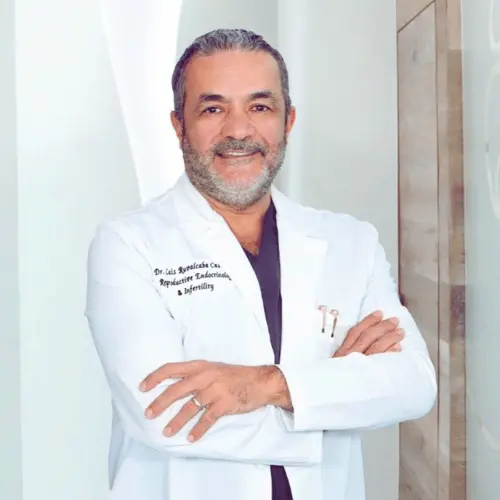
New York City IVF is built around one physician: Dr. Alyaa Elassar, MD, MSc, PhD, FACOG, reproductive endocrinologist and the clinic's founder, medical director, and sole REI. Her credentials span a longer educational arc than most U.S.-trained specialists.
Dr. Elassar earned her Bachelor of Medicine, Bachelor of Surgery (MBBCh) from Cairo University School of Medicine, followed by postgraduate degrees including a Master of Science and a Doctor of Philosophy — research training that underpins her published work on ovarian stimulation protocols and hormonal response in women with low ovarian reserve, with more than 19 peer-reviewed citations in journals including Fertility and Sterility.
Her U.S. clinical training began with a transitional internship at Flushing Hospital Medical Center (2004–2005), followed by an Obstetrics and Gynecology residency at NewYork-Presbyterian Hospital / Weill Cornell Medical Center (2005–2008) — one of the country's most competitive OB/GYN programs. She completed her subspecialty fellowship in Reproductive Endocrinology and Infertility at the University of Connecticut, then returned to New York to establish NYC IVF.
Board certifications are dual: the American Board of Obstetrics and Gynecology has credentialed her in both Obstetrics & Gynecology and in the subspecialty of Reproductive Endocrinology/Infertility. She holds active New York State medical licensure. The FACOG designation reflects fellowship status in the American College of Obstetricians and Gynecologists.
In practice, what the credentials translate to is a physician who is present at every patient visit — not a scheduling curiosity at boutique clinics, but the explicit foundation of NYC IVF's care model. Patients consistently note that Dr. Elassar knows their full history, their emotional state, and their treatment plan without having to be reminded. Supporting her is a dedicated clinical and embryology team that patients describe with the same warmth they extend to the physician — a staff where names are exchanged, recognition is genuine, and the feeling of being a case number is notably absent.
Services and Treatments
NYC IVF offers a comprehensive spectrum of reproductive medicine treatments within a single, vertically integrated facility:
- In Vitro Fertilization (IVF) — controlled ovarian hyperstimulation, egg retrieval, fertilization, blastocyst culture, fresh or frozen embryo transfer
- Intracytoplasmic Sperm Injection (ICSI) — direct sperm injection for male-factor infertility or fertilization optimization
- Intrauterine Insemination (IUI) — first-line treatment for unexplained infertility, mild male-factor cases, and single individuals or same-sex couples using donor sperm
- Egg Freezing (Oocyte Cryopreservation) — vitrification-based fertility preservation; all-inclusive package starting at $9,650, covering monitoring, anesthesia, retrieval, and storage preparation; the clinic guides patients from consultation to stored eggs in approximately two to three weeks
- Frozen Embryo Transfer (FET) — preparation and transfer of previously cryopreserved embryos
- Preimplantation Genetic Testing (PGT) — chromosomal screening and monogenic disorder testing of embryos prior to transfer
- Single Embryo Transfer (SET) — elective single embryo transfer protocols to minimize multiple-pregnancy risk
- Ovulation Induction — medicated cycles monitored with ultrasound and hormone assays
- Fertility Preservation — medically indicated cryopreservation prior to chemotherapy, radiation, or gender-affirming hormone therapy
- Donor Oocyte Cycles — coordination of egg donation for patients with diminished ovarian reserve or recurrent IVF failure
- Donor Sperm — use of sperm bank donors for single patients, same-sex couples, or azoospermia
- Gestational Carrier / Surrogacy — medical coordination for intended parents working with a gestational carrier
- Male Factor Infertility Evaluation and Treatment — semen analysis, ICSI integration, and referral coordination
- Fertility Consultations (In-Person and Telehealth) — initial evaluations and follow-up visits available via telehealth for patients outside the metro area
Laboratory and Success Rates
The physical footprint of NYC IVF's Midtown office conceals a fully self-contained clinical operation. On-site within the 693 Fifth Avenue suite are an IVF laboratory, a procedure and operating room, a cryobank for long-term embryo and egg storage, and a wellness room for the integrative aspects of care. Performing retrievals and transfers in-house — rather than at an affiliated hospital — eliminates the logistical friction of multi-site care and keeps the clinical team consistent from stimulation through transfer.
Laboratory performance metrics reported by the clinic are notably strong. The fertilization rate averages 92%. Post-thaw viability for cryopreserved oocytes and embryos averages 95% — consistent with industry expectations for vitrification-based cryopreservation. Egg survival rates for frozen eggs after thaw exceed 90%.
New York City IVF reports outcomes to the Society for Assisted Reproductive Technology (SART), and cycle-specific success rates by age group and patient diagnosis are available through the national registry. For the most current CDC-compiled ART outcome data for this clinic, visit the CDC ART Success Rates database, which publishes clinic-level results on an annual cycle. Reviewing those figures against your own age and diagnosis profile — ideally with Dr. Elassar during a consultation — gives the most clinically meaningful comparison.
The clinic's emphasis on a personalized stimulation protocol, particularly Dr. Elassar's research background in low ovarian reserve management, is worth noting for patients who have been told their ovarian reserve is diminished. Boutique clinics with physician-researcher founders sometimes apply more nuanced protocols for poor-prognosis patients than high-volume centers running standardized algorithms.
Patient Experience
A 5-star Google rating across 209-plus reviews in a medically sophisticated market like Manhattan is a data point worth interrogating. In a city where patients are highly educated about their options, readily share negative experiences, and have abundant alternatives, ratings do not hold at the ceiling through inertia. At NYC IVF, the consistent themes across platforms — Google, FertilityIQ, Yelp — converge on three things.
First, physician availability and continuity. Patients describe Dr. Elassar as present at every appointment, responsive to messages, and genuinely invested in individual outcomes rather than throughput. In a landscape where the physician who does the retrieval is often not the one who ran the stimulation, that consistency is uncommon.
Second, staff warmth that does not compromise clinical sharpness. Reviews repeatedly describe knowing every team member by name, being recognized on arrival, and feeling supported emotionally without any relaxation of clinical rigor. One FertilityIQ reviewer described the team as "invested in your success" — the kind of comment that reflects a staff culture, not just a single interaction.
Third, transparency without hidden fees. NYC IVF provides a detailed financial breakdown at the first visit. Patients report no billing surprises — a distinction that matters in fertility care, where hidden fees in medication, monitoring, and anesthesia are a frequent source of post-cycle frustration.
The wellness room integrated into the clinic space reflects the clinic's stated philosophy of combining evidence-based science with holistic wellness support — not as an alternative to medicine but as a complement to the emotional weight fertility treatment places on patients.
The clinic holds an explicit LGBTQ+ Competent Care designation based on patient community reviews, reflecting affirming protocols for same-sex couples, single individuals, and transgender patients seeking fertility care.
Considering At-Home Insemination?
Not every fertility journey begins in a clinic. At-home intracervical insemination (ICI) is a lower-cost, private option that suits patients with no known fertility diagnosis — including single parents by choice, same-sex couples, and people who want to try a few cycles before committing to clinical treatment.
At-home insemination kits like those from MakeAMom come with step-by-step instructions designed for donor or partner sperm. Kits are a one-time purchase that can be reused until conception succeeds, require no clinic visit, and arrive in plain, discreet packaging. Many patients use them as a first step while working toward a fertility consultation — or alongside ovulation tracking while they wait for an appointment slot.
If you have a known fertility diagnosis, have been trying for 12 months without success (six months if you're over 35), or your physician has already recommended IUI or IVF, a board-certified reproductive endocrinologist is the right next step.
Insurance and Financing
New York State's fertility insurance law — effective January 1, 2020 — is among the most protective in the United States. Large-group fully insured plans (100 or more employees) are required to cover up to three lifetime IVF cycles, with no annual dollar caps or age restrictions. Coverage extends to associated medications, and to medically necessary embryo and oocyte storage. The definition of infertility is inclusive: 12 months of unprotected intercourse under age 35, six months at 35 or older, and donor insemination is counted, bringing LGBTQ+ patients within the coverage definition.
Critical limitations apply. Self-funded ERISA plans — common at large corporations — are exempt from state mandates. Small-group plans (under 100 employees), individual marketplace plans, and government programs like Medicaid and Medicare managed care are not subject to the mandate. The practical first step for any patient is confirming whether their employer's plan is fully insured and large-group — their HR benefits team or insurer can confirm this directly.
NYC IVF's all-inclusive egg-freezing pricing starts at $9,650, covering monitoring, anesthesia, retrieval, and initial storage setup. The clinic's financial transparency model — detailed cost discussion at the first visit, no hidden fees — reduces the risk of billing shock that characterizes less organized practices. For patients whose insurance does not cover treatment, fertility-specific financing options such as ARC Fertility and Capex MD offer installment loans and multi-cycle discount programs used widely by New York patients.
For a complete state-by-state breakdown of IVF insurance mandates, see the fertility insurance by state guide.
Frequently Asked Questions
What makes NYC IVF different from larger fertility centers in Manhattan? NYC IVF is a boutique, single-physician practice founded and run by Dr. Alyaa Elassar, MD, MSc, PhD, FACOG. Unlike large academic or multi-physician practices, Dr. Elassar is present at every patient visit and performs all retrievals and transfers. The clinic operates a fully in-house lab, operating room, and cryobank at its 693 Fifth Avenue location, so care is integrated rather than distributed across multiple sites. This model prioritizes personalized attention and clinical continuity over volume.
Is NYC IVF a good option for patients with low ovarian reserve or previous IVF failures? Dr. Elassar's research background — with 19-plus peer-reviewed publications focused on ovarian stimulation protocols and hormonal response in patients with diminished ovarian reserve — makes NYC IVF a particularly relevant option for this population. Boutique practices with a physician-scientist founder often apply more individualized protocols to complex-prognosis patients than high-volume centers. A direct consultation is the best way to assess how the clinic's approach would apply to your specific diagnosis.
Does NYC IVF participate in SART and report outcome data to the CDC? Yes. NYC IVF reports cycle outcomes to SART, the Society for Assisted Reproductive Technology. Annual clinic-level data is compiled and published by the CDC's ART surveillance program. Patients can review age-specific and diagnosis-specific success rates through the CDC ART Success Rates database once the most recent annual report is published.
How does New York's IVF insurance mandate apply to NYC IVF patients? New York's mandate requires large-group fully insured plans (100+ employees) to cover three IVF cycles with no dollar caps. NYC IVF accepts insurance and provides a detailed financial consultation at the first visit. Patients should confirm whether their plan is fully insured and large-group — self-insured employer plans are exempt. For context on coverage eligibility and how New York compares to other states, see the fertility clinics in New York resource page. For a broader overview of what IVF treatment involves, see the IVF guide.