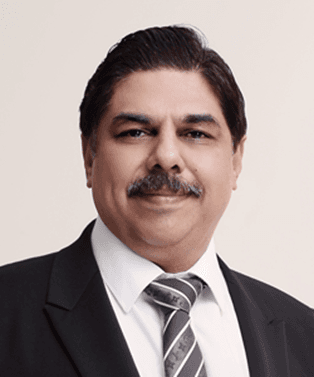
Paul Turek, MD, FACS — An Honest Editorial Review
Men facing male-factor infertility in the Bay Area regularly end up on a short list of reproductive urologists, and Dr. Paul J. Turek is consistently at the top of that list. The Turek Clinics operate out of 450 Sutter Street in San Francisco and 9033 Wilshire Boulevard in Beverly Hills, giving California patients (and a substantial fly-in population) access to microsurgical male-fertility care outside the REI clinic model. Unlike most of the fertility clinics in California we cover, The Turek Clinics is not a SART-reporting IVF practice — it is a specialized reproductive-urology practice that coordinates with partner IVF programs.
About the Physician
Dr. Turek graduated summa cum laude and Phi Beta Kappa from Yale College before completing medical school at Stanford University School of Medicine. He pursued urology residency at the Hospital of the University of Pennsylvania and then a fellowship in male reproductive medicine and microsurgery at Baylor College of Medicine under Dr. Larry Lipshultz — a formative program in the field.
He was later recruited to the University of California, San Francisco, where he held the Academy of Medical Educators Endowed Chair in Urology and served as Director of the UCSF Men's Reproductive Health Clinic and Research Program, Director of the Male Reproductive Clinical Laboratory, and Program Leader of PROGENI (The Program in the Genetics of Infertility). After a long academic career, he departed UCSF to found The Turek Clinics in private practice. He is board certified by the American Board of Urology via the ABMS system, a Fellow of the American College of Surgeons (FACS), and a Fellow of the Royal Society of Medicine (FRSM). His individual NPI is 1770519233 under urology taxonomy 208800000X. His PubMed publication record includes well over one hundred peer-reviewed articles on male reproductive medicine.
Practice Focus
The Turek Clinics is built around male-fertility microsurgery at a volume and technical level that very few US practices match. Dr. Turek's operative focus covers the conditions that most general urologists refer out: non-obstructive azoospermia, severe oligospermia, post-vasectomy fertility, varicocele, and oncofertility for men facing cancer treatment.
Services Offered
- Microsurgical varicocelectomy
- Microsurgical vasectomy reversal (vasovasostomy and vasoepididymostomy)
- Micro-TESE (microdissection testicular sperm extraction) for non-obstructive azoospermia
- TESE and TESA (testicular sperm extraction/aspiration)
- PESA and MESA (epididymal sperm aspiration)
- Sperm retrievals coordinated with a partner's IVF/ICSI cycle
- Male hormonal evaluation and medical therapy
- Oncofertility consultation for male cancer patients
- Genetic evaluation for male infertility (Y-chromosome microdeletion, karyotype, CFTR)
What This Practice Is NOT
The Turek Clinics is a reproductive-urology practice, not a SART-member REI clinic. Dr. Turek does not run IVF cycles, egg retrievals, or embryo transfers in-house, and no success-rate data appears in the SART Clinic Summary Report because male-fertility surgery is not an ART cycle. When a patient's care plan requires IVF with ICSI, the partner's eggs are retrieved and fertilized at a SART-member REI clinic; Dr. Turek's role is typically the diagnostic workup, the surgical sperm retrieval, and ongoing reproductive-urology management.
Bay Area REI Partnership Pathways
Couples working with Dr. Turek commonly coordinate IVF through a Bay Area REI program such as Pacific Fertility Center, Reproductive Science Center of the SF Bay Area, UCSF Center for Reproductive Health, Spring Fertility, Kaiser Permanente's Northern California fertility program, or CCRM San Francisco. Timing is tight — a surgical sperm retrieval is often scheduled the same day as the partner's egg retrieval so the embryology lab can fertilize fresh. Ask both offices how they handle courier logistics, cryopreservation backup, and anesthesia scheduling before you commit.
California Insurance Context
California's SB 729 expanded large-group commercial coverage of IVF, with a rollout timeline adjusted by the Department of Managed Health Care and self-funded (ERISA) plans exempt. The mandate primarily addresses ART cycles on the female partner's side; male-fertility surgical coverage (varicocelectomy, vasectomy reversal, micro-TESE) varies meaningfully by plan, and some carriers treat these as out-of-network urology procedures. See our fertility insurance mandates by state guide and verify urology benefits directly before scheduling surgery.
Patient Experience
Dr. Turek's clinic maintains a 4.8 rating across 138 reviews. Themes in public feedback include clarity during complex diagnostic consults, competence in high-stakes microsurgical cases, and thorough coordination with the partner's REI program.
When to Consult
Reasonable reasons to see a reproductive urologist rather than starting at an REI clinic include azoospermia or severe oligospermia on semen analysis, a prior vasectomy with renewed fertility goals, a clinical varicocele with subfertility, a new cancer diagnosis with upcoming gonadotoxic treatment, or a failed prior sperm-retrieval attempt. A full preconception health review on the female-partner side can run in parallel.
Location and Contact
San Francisco: 450 Sutter Street, Suite 1708, San Francisco, CA 94108 — (415) 392-3200 Beverly Hills: 9033 Wilshire Boulevard, Suite 408, Beverly Hills, CA 90211 — (310) 499-9299 Website: theturekclinic.com
Frequently Asked Questions
What is the difference between a reproductive urologist and an REI? A reproductive urologist is a urologist with fellowship training in male reproductive medicine and microsurgery who diagnoses and surgically treats male-factor infertility. An REI (reproductive endocrinologist and infertility specialist) is an OB-GYN with REI fellowship training who runs IVF, IUI, and hormonal fertility care, most often for the female partner. Complex male-factor cases typically involve both.
What is the typical timeline after a male-fertility procedure? After vasectomy reversal, sperm typically return to the ejaculate over three to six months, with many pregnancies in the first year. For micro-TESE, sperm (if found) are frozen or used fresh in sync with the partner's IVF/ICSI cycle. Your surgeon will set expectations specific to your anatomy and pathology.
How does coordination with the partner's REI cycle work? Micro-TESE and other surgical retrievals are often timed to the partner's egg retrieval so embryology can perform ICSI on fresh sperm. Scheduling is built backward from the stimulation calendar; both offices should be in contact well before the trigger shot.
Editorial note: Independently written by the Fertlo editorial team; not sponsored. See our editorial policy.