
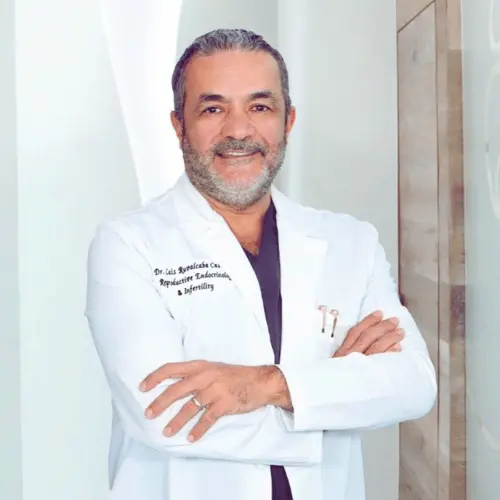
Reproductive Medicine & Infertility Associates (RMIA) sits at 2101 Woodwinds Drive in Woodbury, Minnesota — a first-ring suburb directly east of St. Paul that anchors the eastern Twin Cities metro. The location gives residents of the east metro, Washington County, and the broader eastern suburban corridor convenient access to subspecialty REI care without a cross-city commute. RMIA has been operating since 1999, founded on the philosophy of "turning patients into parents" — a tagline that stuck because the clinical team behind it has spent more than two decades earning it. Today the practice holds a 4.6-star Google rating across 211-plus reviews, and it has expanded to three Minnesota locations: Woodbury, Edina, and Maple Grove.
RMIA is not a large hospital system satellite — it is an independent fertility specialty practice whose entire clinical identity is built around reproductive endocrinology and infertility. That focus matters. The physicians are fellowship-trained subspecialists, the laboratory is an IVF-dedicated facility, and the support staff are oriented toward the particular emotional and logistical demands of fertility treatment rather than general obstetrics. For eastern metro patients, RMIA is the region's primary independent REI option — one that competes credibly with the larger academic practices in Minneapolis. For additional context on accredited practices across the state, see fertility clinics in Minnesota.
Physicians and Clinical Team
RMIA's physician roster is built entirely around fellowship-trained reproductive endocrinologists, each board-certified in both obstetrics and gynecology and reproductive endocrinology and infertility (REI) through the American Board of Obstetrics and Gynecology.
Phoebe H. Leonard, MD serves as Medical Director of the IVF Program. Dr. Leonard graduated summa cum laude from Northern Arizona University before earning her medical degree from Creighton University School of Medicine. She completed both her OB/GYN residency and her REI fellowship at Mayo Clinic in Rochester, Minnesota. She holds adjunct professorship at the University of Minnesota Department of Obstetrics and Gynecology and has received multiple excellence-in-teaching awards. Her clinical focus spans IVF, PCOS, diminished ovarian reserve, endometriosis-related infertility, and male-factor infertility.
Tana Kim, MD is IVF Director. She graduated magna cum laude from the University of Illinois at Urbana-Champaign, then earned her medical degree from the Medical College of Wisconsin before completing her OB/GYN residency at the University of Minnesota. Her REI fellowship was at Mayo Clinic, where she also earned a master's degree in biomedical sciences. Dr. Kim joined RMIA in 2020, is an adjunct professor at the University of Minnesota, and has received recognition from the American Academy of Gynecologic Laparoscopists for excellence in minimally invasive surgery. Her clinical interests include IVF, preimplantation genetic testing, fertility preservation, recurrent pregnancy loss, diminished ovarian reserve, and male-factor infertility.
Jani R. Jensen, MD is Director of Third-Party Reproduction. She holds undergraduate, master's, and medical degrees from the University of Wisconsin–Madison and completed her OB/GYN residency at the University of Colorado in Denver before finishing her REI fellowship at the University of Texas Health Science Center at San Antonio. She joined RMIA in December 2016 and is a member of SREI, ABOG, and ASRM. Dr. Jensen's clinical focus centers on LGBTQ+ family building, third-party reproduction — including sperm and egg donation and gestational carriers — fertility preservation, IVF, and holistic fertility care.
Sarah Baumgarten, MD, PhD serves as Director of Education. She earned her undergraduate degree from Vanderbilt University and her combined MD-PhD from the University of Illinois at Chicago, then completed both her OB/GYN residency and her REI fellowship at Mayo Clinic. She joined RMIA in 2024. Her research background includes basic science work on hormones and ovarian cells, as well as clinical investigations into anxiety during IUI, frozen embryo transfer outcomes, PCOS, and pregnancy loss. Her clinical interests include IVF, LGBTQ+ family building, and third-party reproduction.
The clinical team also includes Michelle Valentine, APRN, CNP, an advanced practice registered nurse who provides monitoring and coordination support throughout treatment cycles, and G. David Ball, PhD, who directs the embryology laboratory.
Services and Treatments
RMIA offers a comprehensive menu of reproductive endocrinology services across its three Minnesota locations:
- In Vitro Fertilization (IVF) — the core offering, including standard IVF and intracytoplasmic sperm injection (ICSI)
- Intrauterine Insemination (IUI) — a lower-intensity first-step treatment for appropriate candidates
- Egg Freezing and Fertility Preservation — including medically indicated preservation for patients facing cancer treatment or other fertility-threatening diagnoses
- Preimplantation Genetic Testing (PGT) — chromosomal screening to identify euploid embryos before transfer, and PGT-M for single-gene disorders
- Egg Donation Program — a structured pathway using fresh or frozen donor oocytes for patients who need third-party eggs
- Gestational Carrier Program — surrogacy coordination for intended parents unable to carry a pregnancy
- Donor Sperm Services — used in single-parent and LGBTQ+ family-building pathways
- LGBTQ+ Family Building — all applicable pathways including reciprocal IVF, donor sperm IUI, egg donation, and gestational carriers
- Male-Factor Infertility Evaluation and Treatment — semen analysis, male fertility workup, and treatment coordination
- Treatment for Recurrent Pregnancy Loss — diagnostic workup and management protocols
- Endometriosis-Related Infertility — surgical and IVF-based approaches
- PCOS Management — ovulation induction, lifestyle counseling, and IVF when indicated
- Diminished Ovarian Reserve Management — individualized stimulation protocols and donor egg coordination when needed
- Telemedicine Consultations — available for initial and follow-up appointments for patients with distance or scheduling constraints
Laboratory and Success Rates
RMIA's embryology laboratory is directed by G. David Ball, PhD, a credentialed laboratory scientist with long-standing tenure at the practice. The lab performs the full cycle of IVF procedures — oocyte retrieval, fertilization, embryo culture, vitrification, and frozen embryo transfer — within a dedicated reproductive medicine setting rather than a shared hospital laboratory environment. The clinic has also explored AI-assisted embryo selection tools as part of its approach to maximizing live-birth outcomes.
RMIA is a verified member of the Society for Assisted Reproductive Technology (SART) and reports annual cycle data to the national registry. The clinic's most recent verified SART data (2023) recorded 1,661 total cycles — a volume consistent with a high-throughput independent REI practice. Among patients using their own eggs, live birth rates reached 66.7% for patients under 35, 55.0% for those aged 35–37, and 42.9% for the 38–40 age group. The singleton birth percentage was high across all age groups, reflecting an elective single-embryo transfer emphasis that aligns with current ASRM guidelines on reducing multiple-gestation risk.
Because SART publishes data on an approximately two-year lag, patients should verify the most recent cycle-specific figures on the SART consumer website and on the CDC ART national reporting database. Both sources allow comparison against national benchmarks by age group, which is the most reliable way to evaluate clinic performance relative to the patient population each program treats.
For a deeper orientation to how these numbers are built and what to look for by age, see our IVF guide.
Patient Experience
RMIA's 4.6-star Google rating across 211-plus reviews reflects a practice that has consistently delivered personalized, attentive care. Recurring themes across patient feedback include staff responsiveness — nurses and coordinators who return calls promptly and maintain communication through a secure patient portal — and a clinic culture that greets returning patients by name and keeps the waiting room environment calm and organized.
The physician team draws praise for thoroughness and clarity. Patients report that appointments feel unhurried and that doctors address questions directly rather than deferring them. The practice's LGBTQ+ inclusive stance, championed in particular by the third-party reproduction program under Dr. Jensen, resonates with same-sex couples and single intended parents who have found RMIA to be a genuinely welcoming environment rather than merely a tolerant one.
Dr. Kim's dual recognition for surgical excellence and her collaborative research background signals a practice that is engaged with evolving clinical evidence — not relying solely on established protocols but incorporating newer tools like AI-assisted embryo selection and endometrial receptivity analysis as supporting evidence accumulates.
The three-location footprint — Woodbury, Edina, and Maple Grove — means that patients across the metro can access monitoring and follow-up appointments closer to home even when primary care is anchored at the Woodbury campus.
Considering At-Home Insemination?
Not every fertility journey begins in a clinic. At-home intracervical insemination (ICI) is a lower-cost, private option that suits patients with no known fertility diagnosis — including single parents by choice, same-sex couples, and people who want to try a few cycles before committing to clinical treatment.
At-home insemination kits like those from MakeAMom come with step-by-step instructions designed for donor or partner sperm. Kits are a one-time purchase that can be reused until conception succeeds, require no clinic visit, and arrive in plain, discreet packaging. Many patients use them as a first step while working toward a fertility consultation — or alongside ovulation tracking while they wait for an appointment slot.
If you have a known fertility diagnosis, have been trying for 12 months without success (six months if you're over 35), or your physician has already recommended IUI or IVF, a board-certified reproductive endocrinologist is the right next step.
Insurance and Financing
Minnesota patients have gained significant financial protection following the passage of the Building Families Act (HF 1758), which took effect January 1, 2026. Large-group health plans covering more than 25 employees that include maternity benefits are now required to cover infertility diagnosis and treatment, including IVF, IUI, ovulation induction, oocyte retrieval, cryopreservation, and fertility preservation. There is no lifetime dollar cap on embryo transfers, though plans may limit completed egg retrievals to four per plan year.
This mandate substantially changes the financial landscape for RMIA patients who carry qualifying employer-sponsored coverage. Patients who previously faced $11,000 or more out of pocket for a single IVF cycle — not counting medications — now have a viable path to insurance-covered treatment depending on their employer plan structure. Patients with self-insured employer plans or small-group coverage should verify their specific benefits directly with their insurer.
For patients whose plans do not cover fertility treatment, RMIA offers customizable financial options and has historically provided innovative warranty programs that share risk with patients over multiple-cycle commitments. The clinic's financial counselors can map out out-of-pocket exposure during the initial consultation. Prospective patients can also reference our fertility insurance by state guide for a full breakdown of the Minnesota mandate and how it compares nationally.
Frequently Asked Questions
Does RMIA see patients from outside the Twin Cities metro? Yes. RMIA serves patients statewide and nationally, with telemedicine consultations available for initial appointments and follow-ups. Patients traveling for IVF treatment typically need to be in the Twin Cities metro for the egg retrieval and embryo transfer portions of the cycle; monitoring bloodwork and ultrasounds can sometimes be coordinated locally closer to the patient's home.
What is the typical wait time for a new patient appointment at RMIA? Wait times vary by provider and season. The three-location footprint — Woodbury, Edina, and Maple Grove — provides scheduling flexibility. Prospective patients can contact RMIA at 651-222-6050 (Monday through Friday, 7:30 a.m. to 4:00 p.m.) or submit an inquiry through the patient portal on rmia.com for current availability.
How do I interpret RMIA's SART success rate data? SART data is reported with an approximately two-year delay, so the most recently published figures reflect cycles completed two years prior. Look at live birth rates per transfer stratified by age group — the 35-and-under cohort is most favorable and does not predict outcomes for patients in the 38-plus age range. RMIA's 2023 SART report showed strong outcomes in the under-35 and 35–37 age groups and can be reviewed directly on the SART consumer website. Our IVF guide walks through how to read and compare these statistics across clinics.
Is RMIA LGBTQ+ affirming? Yes, explicitly. RMIA offers the full range of family-building pathways for same-sex couples, single intended parents, and transgender and nonbinary individuals — including reciprocal IVF, donor sperm IUI, egg donation, and gestational carrier coordination. Dr. Jensen, as Director of Third-Party Reproduction, leads this program and has made LGBTQ+ inclusive care a central part of her clinical practice since joining RMIA in 2016. The clinic's founding vision under Dr. Jacques Stassart, who built RMIA from the ground up beginning in 1999, was explicitly centered on inclusivity for all patients pursuing parenthood.