
Reproductive Medicine Associates, P.A., operating as the Jacksonville Center for Reproductive Medicine (JCRM), is located at 836 Prudential Drive in Jacksonville, Florida — in the Riverside/Avondale area of downtown Jacksonville, adjacent to the St. Johns River and close to Baptist Medical Center and the Wolfson Children's Hospital complex. Prudential Drive is one of Jacksonville's prominent medical corridors, bordered by the St. Johns River to the west and a dense cluster of medical office buildings and specialty practices to the east. This location serves patients from across Duval County and the surrounding First Coast region, including neighborhoods from San Marco and Southside through the Beaches communities (Jacksonville Beach, Neptune Beach, Atlantic Beach), Clay County (Orange Park, Fleming Island), Nassau County, and patients traveling from northeastern Florida and southeastern Georgia. For a broader view of fertility clinics in Florida, see the state directory.
Physicians and Clinical Team
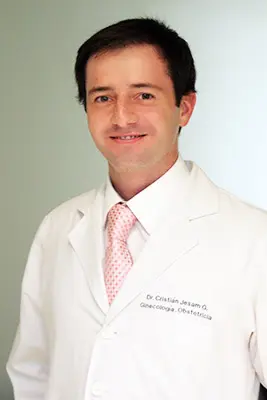
The Jacksonville Center for Reproductive Medicine operates as a P.A. (professional association) in Florida — the Florida form of a physician-owned professional corporation. JCRM's physician team consists of board-certified reproductive endocrinologists with fellowship-level training and dual REI subspecialty board certification from the American Board of Obstetrics and Gynecology. Jacksonville is Florida's largest city by land area and one of its most populous, supporting a fertility practice of meaningful scale with a physician team that can serve a large and geographically diverse patient base.
JCRM's website (jcrm.org) reflects an independent practice identity, positioning this as a physician-owned, Jacksonville-rooted fertility center rather than a branch of a national fertility chain. The independent practice model typically allows for more individualized care and physician continuity than large shared-care network models.
Services and Treatments
Jacksonville Center for Reproductive Medicine provides:
- IVF (in vitro fertilization), including ovarian stimulation, monitoring, egg retrieval, fertilization, and embryo transfer
- IUI (intrauterine insemination) with partner or donor sperm
- Egg freezing (oocyte cryopreservation) for elective and medically indicated preservation
- Frozen embryo transfer (FET)
- Preimplantation genetic testing — PGT-A and PGT-M
- Donor egg IVF
- Donor sperm IUI and IVF
- Gestational carrier (surrogacy) coordination
- Male infertility evaluation: semen analysis and referral for urologic assessment
- PCOS diagnosis and treatment
- Endometriosis-related fertility evaluation
- Recurrent pregnancy loss evaluation
- Uterine cavity assessment: sonohysterogram and hysteroscopy
- Oncofertility consultation prior to cancer treatment
- LGBTQ+-inclusive family building services
- Ovarian reserve evaluation and fertility preservation counseling for patients not yet ready to conceive
Laboratory and Success Rates
JCRM maintains an on-site embryology laboratory supporting full IVF cycles. The laboratory handles ICSI, extended blastocyst culture, embryo biopsy for PGT, vitrification, and embryo thaw. As the longest-established independent fertility center in Jacksonville, JCRM's laboratory has accumulated significant clinical experience in the northeast Florida patient population.
Patients should review the most current cycle-level data published by the CDC's ART Surveillance program and the SART Clinic Summary Report.
Patient Experience
The Prudential Drive location in Riverside places JCRM at the heart of Jacksonville's primary medical corridor, adjacent to Baptist Health's flagship hospital campus and the San Marco neighborhood. Patients from across the First Coast have highway access via I-95, I-10, and the Fuller Warren Bridge (I-95 connector to the Southside). The beach communities — Jacksonville Beach, Neptune Beach, Atlantic Beach — are a roughly 25-minute drive from this location via Beach Boulevard.
Jacksonville is Florida's population center in the northeast, and JCRM's Prudential Drive address is the kind of central location that minimizes travel time for patients distributed across a geographically large metro area. Jacksonville's beach culture and relatively affordable cost of living compared to South Florida attract young families and professionals, contributing to a patient population with diverse fertility treatment needs.
JCRM's independent practice identity may offer patients a more cohesive care experience than a large national chain, with the physician team rooted in the Jacksonville community and familiar with local referral networks, hospital relationships, and the First Coast patient population.
Considering At-Home Insemination?
Not every fertility journey begins in a clinic. At-home intracervical insemination (ICI) is a lower-cost, private option that suits patients with no known fertility diagnosis — including single parents by choice, same-sex couples, and people who want to try a few cycles before committing to clinical treatment.
At-home insemination kits like those from MakeAMom come with step-by-step instructions designed for donor or partner sperm. Kits are a one-time purchase that can be reused until conception succeeds, require no clinic visit, and arrive in plain, discreet packaging. Many patients use them as a first step while working toward a fertility consultation — or alongside ovulation tracking while they wait for an appointment slot.
If you have a known fertility diagnosis, have been trying for 12 months without success (six months if you're over 35), or your physician has already recommended IUI or IVF, a board-certified reproductive endocrinologist is the right next step.
Insurance and Financing
Florida does not have a state IVF insurance mandate. Patients at JCRM pay for IVF out of pocket unless their employer plan voluntarily includes fertility coverage. Jacksonville's large employer base — Navy and military installations, financial services companies, healthcare systems, and logistics firms — includes some that offer voluntary fertility benefits, but coverage is not guaranteed.
JCRM as an independent practice can work with patients directly on pricing and financial planning. Patients should ask about bundled IVF cycle pricing, multi-cycle programs, and financing options through third-party fertility lenders. Medication costs are a significant and often underestimated part of the total IVF investment — ask the practice whether they provide medication cost estimates as part of the initial financial consultation.
Frequently Asked Questions
Is JCRM an independent practice or part of a national fertility chain? JCRM — Jacksonville Center for Reproductive Medicine — operates as an independent physician-owned practice (P.A. in Florida). It is not a branch of a national fertility network. This means the physicians own and operate the practice and make clinical decisions autonomously, without corporate protocol constraints.
How does JCRM serve patients from the Jacksonville Beaches and Clay County? The Prudential Drive location is accessible from most of the First Coast metro area. Beach communities are approximately 25-30 minutes away via Beach Boulevard or the JTB. Clay County patients can use I-295 and I-95 connections. During the intensive monitoring phase of IVF, daily driving to the Riverside clinic is the expected routine for most patients.
What should I bring to my first consultation at JCRM? Bring any prior fertility testing results, OB/GYN records, prior cycle summaries if applicable, and your insurance card. If your partner is participating in the evaluation, they should be prepared for a semen analysis. The first consultation will include a review of your history, a physical examination (typically including a transvaginal ultrasound), and a discussion of recommended next steps.
Does Florida law affect my IVF options in any way? Florida does not have a state IVF mandate or unique ART legislation affecting most standard clinical procedures. Patients with specific questions about preimplantation genetic testing, embryo disposition, or third-party reproduction law in Florida should consult with a Florida-licensed reproductive law attorney for current guidance.