
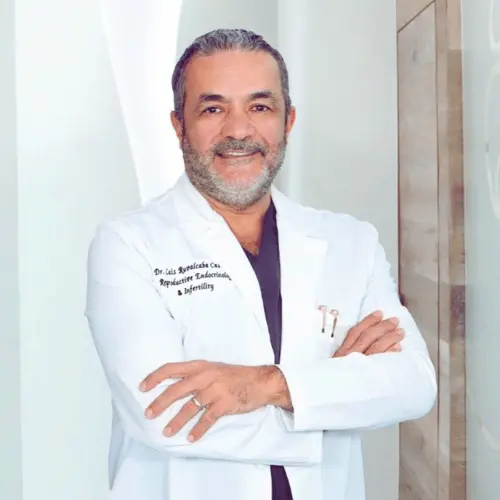
UC Health Center for Reproductive Health, LLC is a fertility practice located in Franklin, Tennessee — one of the fastest-growing communities in the United States, situated approximately 20 miles south of Nashville in Williamson County. Franklin sits at the geographic heart of the Nashville metropolitan area's southward expansion, drawing a young, professional, and family-oriented population. The clinic serves patients from Franklin, Brentwood, Spring Hill, Columbia, Murfreesboro, and surrounding Middle Tennessee communities who prefer a southern Nashville suburban location over commuting to Nashville proper for fertility care. For an overview of fertility resources statewide, visit the Tennessee fertility clinics directory.
Physicians and Clinical Team
The "UC Health" branding in this entity's name may reflect an affiliation with or derivation from University of Cincinnati Health — a major academic health system — or may be an independent entity using similar nomenclature. Patients should confirm the specific affiliation and governance structure directly with the clinic. Whether affiliated with an academic health system or operating independently, the practice provides reproductive endocrinology and infertility subspecialty care in the Franklin market.
The clinical team is led by board-certified reproductive endocrinologists who have completed ABOG-accredited fellowship training in the subspecialty. Supporting staff include reproductive nurses, a patient coordinator, sonographers for cycle monitoring, and embryology laboratory personnel supporting the IVF program.
Franklin's position as one of Tennessee's most affluent and fastest-growing communities means the practice serves a patient population with relatively high healthcare literacy and often with access to employer-sponsored benefits programs that may include voluntary fertility coverage.
Services and Treatments
UC Health Center for Reproductive Health provides a comprehensive range of fertility services:
- IVF (In Vitro Fertilization) — individualized stimulation and laboratory-based IVF with extended blastocyst culture
- IUI (Intrauterine Insemination) — natural-cycle and medicated for appropriate indications
- Egg Freezing — elective fertility preservation and oncofertility services
- Preimplantation Genetic Testing (PGT-A/PGT-M) — aneuploidy screening and single-gene disorder testing of embryos
- Frozen Embryo Transfer (FET) — natural-cycle and hormone-replacement protocols
- Donor Egg IVF — coordination with established donor agencies or known donors
- Donor Sperm Services
- Male Infertility Evaluation — semen analysis, hormonal panel, urological referral
- Third-Party Reproduction — gestational surrogacy coordination
- Recurrent Pregnancy Loss Evaluation — anatomical, thrombophilic, immunologic, and genetic workup
- Reproductive Endocrine Disorders — PCOS, thyroid dysfunction, adrenal disorders, premature ovarian insufficiency
Laboratory and Success Rates
Franklin's southern Nashville suburban location benefits from proximity to Nashville's healthcare infrastructure while offering patients a more accessible suburban clinical setting. The embryology laboratory supporting the IVF program is central to treatment outcomes, with capabilities including ICSI, vitrification, extended culture, and PGT biopsy coordination.
Patients evaluating this program alongside Nashville-based programs should assess published outcome data for each individually, as laboratory staffing, protocols, and volume can differ meaningfully between programs even in the same metropolitan area.
Patients should review the most current cycle-level data published by the CDC's ART Surveillance program and the SART Clinic Summary Report.
Patient Experience
Franklin is a prosperous, car-accessible community with excellent suburban infrastructure — wide roads, plentiful parking, and proximity to pharmacies, imaging centers, and ancillary services relevant to an active fertility treatment cycle. For Williamson County patients, having a fertility specialist in Franklin rather than in Nashville proper can save significant commute time during monitoring-intensive IVF phases.
Tennessee's rapidly growing healthcare sector and the Nashville metro area's professional population mean a fertility program in Franklin serves a well-informed, diverse patient base. The clinic's geographic positioning within one of the most dynamic growth markets in the southeastern U.S. suggests continued expansion of the patient population it serves.
Considering At-Home Insemination?
Not every fertility journey begins in a clinic. At-home intracervical insemination (ICI) is a lower-cost, private option that suits patients with no known fertility diagnosis — including single parents by choice, same-sex couples, and people who want to try a few cycles before committing to clinical treatment.
At-home insemination kits like those from MakeAMom come with step-by-step instructions designed for donor or partner sperm. Kits are a one-time purchase that can be reused until conception succeeds, require no clinic visit, and arrive in plain, discreet packaging. Many patients use them as a first step while working toward a fertility consultation — or alongside ovulation tracking while they wait for an appointment slot.
If you have a known fertility diagnosis, have been trying for 12 months without success (six months if you're over 35), or your physician has already recommended IUI or IVF, a board-certified reproductive endocrinologist is the right next step.
Insurance and Financing
Tennessee does not have a state IVF insurance mandate. Fertility treatment in Tennessee is predominantly paid for out of pocket or through voluntary employer fertility benefits. IVF in the Nashville metro market typically costs $12,000–$18,000 per cycle before medications.
For Franklin-area patients, financing strategies include:
- Employer benefits review — Franklin's employer base includes large healthcare, financial services, and technology companies, some of which offer voluntary fertility coverage
- Third-party medical financing — CapexMD, Prosper Healthcare Lending, and similar lenders offer fertility-specific loan products
- Multi-cycle packages — reduced per-cycle pricing for patients purchasing two or three cycles in advance
- HSA/FSA — fertility diagnostic and treatment expenses are tax-advantaged under federal law
- Shared-risk programs — higher upfront cost with partial refund guarantees if no live birth results within program terms
Frequently Asked Questions
Is UC Health Center for Reproductive Health affiliated with the University of Cincinnati Health system? This is a detail patients should confirm directly with the practice. The entity name includes "UC Health" branding, which may reflect an academic affiliation, a licensing arrangement, or independent branding. Understanding the affiliation structure can matter for insurance network participation and referral pathways.
What is the typical timeline from initial consultation to egg retrieval for IVF in Franklin? After an initial consultation and baseline testing (typically 1–2 weeks), a full IVF cycle takes 4–6 weeks: 1–2 weeks of pre-treatment preparation (often including oral contraceptive suppression), 10–14 days of ovarian stimulation with daily injectable medications and monitoring, then egg retrieval. The full cycle from consultation to retrieval is typically 6–10 weeks.
How does Williamson County's demographic profile affect access to fertility care? Williamson County is one of the highest-income counties in Tennessee and has a large proportion of young professional families — a demographic with both the financial resources and the healthcare awareness to seek fertility care. This patient profile often means strong employer-based fertility benefits from large local employers, high rates of elective egg freezing, and an informed patient base that engages actively in treatment decisions.
Does the clinic offer telemedicine consultations for patients in rural Tennessee? Many fertility practices have expanded telemedicine capabilities, allowing initial consultations and follow-up appointments to be conducted virtually. Patients in rural Middle Tennessee communities — including areas south of Columbia or west of Murfreesboro — should ask whether a virtual initial consultation is possible before committing to an in-person trip.