
Weill Cornell Medicine's Center for Reproductive Medicine, located at 1305 York Avenue on New York City's Upper East Side, is one of the nation's most prominent academic fertility programs. Affiliated with Weill Cornell Medical College and NewYork-Presbyterian Hospital, the Center for Reproductive Medicine has been at the forefront of reproductive endocrinology research and clinical innovation for decades. Patients exploring fertility care throughout New York can view additional providers in the New York fertility clinics directory.
The 1305 York Avenue address — in the heart of the Upper East Side's medical corridor — sits within walking distance of NewYork-Presbyterian/Weill Cornell Medical Center, enabling the kind of multi-disciplinary coordination that complex fertility cases often require. The center operates a second location at 255 Greenwich Street in Lower Manhattan, providing access for patients in Lower Manhattan and Brooklyn as well.
Physicians and Clinical Team
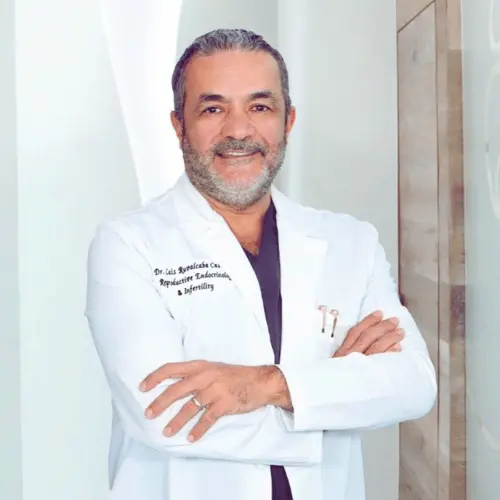
The Center for Reproductive Medicine at Weill Cornell Medicine is staffed by faculty reproductive endocrinologists who hold academic appointments at Weill Cornell Medical College. These physicians combine active clinical practice with research programs that have contributed foundational advances in IVF, egg donation, embryo cryopreservation, and the genetics of human reproduction.
Faculty at the Weill Cornell CRM include some of the field's most recognized specialists in areas such as male reproductive medicine, recurrent pregnancy loss, polycystic ovary syndrome, ovarian aging, and endometrial function. The academic environment means patients with complex presentations can benefit from faculty expertise, departmental case review, and access to emerging clinical protocols.
The clinical team includes reproductive endocrinology faculty, reproductive urology (for male-factor cases requiring surgical sperm retrieval), clinical nurses, embryologists, genetic counselors, reproductive psychologists, and patient care coordinators — a full multidisciplinary team embedded within a major academic medical center.
Services and Treatments
Weill Cornell CRM offers the full spectrum of reproductive medicine services, with particular depth in complex case management:
- Comprehensive fertility evaluation for individuals and couples
- Advanced ovarian reserve assessment and ovarian aging consultation
- Male fertility evaluation and treatment (collaborative with reproductive urology)
- Surgical sperm retrieval (TESE, micro-TESE) for azoospermia
- Ovulation induction and IUI
- In vitro fertilization (IVF) — including natural cycle, minimal stimulation, and conventional protocols
- Intracytoplasmic sperm injection (ICSI)
- Preimplantation genetic testing (PGT-A, PGT-M, PGT-SR)
- Egg cryopreservation (elective and oncofertility)
- Frozen embryo transfer
- Donor egg recipient cycles (fresh and frozen)
- Gestational carrier coordination
- Recurrent pregnancy loss evaluation and management
- Uterine factor evaluation and reproductive surgery
- LGBTQ+ family-building
- Clinical trial enrollment
The center's academic strength in male reproductive medicine — including micro-TESE for non-obstructive azoospermia and hormonal treatment for male endocrine disorders — makes it a referral destination for complex male-factor cases.
Laboratory and Success Rates
Weill Cornell CRM's IVF laboratory is one of the longest-running high-complexity ART laboratories in the United States. The lab maintains advanced embryo culture infrastructure, time-lapse monitoring, vitrification cryopreservation, and in-house genetic testing capabilities. The laboratory team includes senior embryologists with decades of collective experience.
Patients should review the most current cycle-level data published by the CDC's ART Surveillance program and the SART Clinic Summary Report.
Academic IVF programs often treat a disproportionately high percentage of patients with complex diagnoses — poor prognosis cases, recurrent failure, severe male factor — which can affect aggregate success rate statistics. Age-stratified and diagnosis-specific data are more informative than headline figures for this reason.
Patient Experience
The 1305 York Avenue address is within the NewYork-Presbyterian/Weill Cornell campus complex, accessible by the 4/5/6 subway lines (68th Street/Hunter College station) and with limited parking in the surrounding Upper East Side streets. The clinic operates within a major academic medical center environment — which means access to a full-service hospital, subspecialty consultation, and research participation, alongside the wait times and administrative complexity that academic medicine can involve.
Patients choosing an academic fertility center often do so for the depth of clinical expertise, research orientation, and access to subspecialty colleagues within the same institution. Those who prioritize a boutique, highly personal practice experience may find independent clinics more comfortable, while patients with complex cases often find the academic environment specifically valuable.
Wait times for new patient consultations at Weill Cornell CRM can be longer than at independent practices — planning ahead when initiating care is advisable. Ask about the timeline from consultation to first treatment cycle start.
Considering At-Home Insemination?
Not every fertility journey begins in a clinic. At-home intracervical insemination (ICI) is a lower-cost, private option that suits patients with no known fertility diagnosis — including single parents by choice, same-sex couples, and people who want to try a few cycles before committing to clinical treatment.
At-home insemination kits like those from MakeAMom come with step-by-step instructions designed for donor or partner sperm. Kits are a one-time purchase that can be reused until conception succeeds, require no clinic visit, and arrive in plain, discreet packaging. Many patients use them as a first step while working toward a fertility consultation — or alongside ovulation tracking while they wait for an appointment slot.
If you have a known fertility diagnosis, have been trying for 12 months without success (six months if you're over 35), or your physician has already recommended IUI or IVF, a board-certified reproductive endocrinologist is the right next step.
Insurance and Financing
New York State mandates coverage of three IVF cycles per lifetime for patients with a qualifying infertility diagnosis on large group fully-insured plans. Weill Cornell CRM participates in major New York commercial insurance networks, including the BlueCross BlueShield plans common among NewYork-Presbyterian-affiliated benefits.
As an academic medical center program, Weill Cornell CRM's billing operates through the Weill Cornell Medicine physician group and NewYork-Presbyterian institutional billing channels — patients should verify both physician and facility coverage when using insurance here, as facility fees may apply.
For patients with limited or no fertility coverage, financial counseling is available. Some research study protocols may cover part of the cost of treatment for eligible participants.
Frequently Asked Questions
What makes Weill Cornell CRM different from independent fertility clinics in New York? The primary differentiators are academic depth and multidisciplinary infrastructure. Weill Cornell CRM faculty conduct research that shapes how IVF is practiced nationally and internationally. The program's integration within NewYork-Presbyterian Hospital enables coordinated care for patients with complex medical backgrounds — including cancer patients pursuing fertility preservation, patients with autoimmune conditions, and those with systemic diseases affecting reproduction. Independent practices may offer more personalized access and shorter wait times; academic programs offer greater subspecialty depth.
Does Weill Cornell CRM have experience with male-factor infertility? Yes. The center has a dedicated male reproductive medicine program, with collaborative reproductive urologists who specialize in sperm retrieval procedures (TESE, micro-TESE), hormonal treatment of male hypogonadism, and the evaluation of men with azoospermia. This level of male reproductive specialization is not available at every fertility center.
Can I receive care at both the York Avenue and Greenwich Street locations? Both locations are part of the same Weill Cornell CRM program and share the same physician faculty and laboratory infrastructure. Patients may use either location for monitoring or consultation, with procedural care (retrieval, transfer) potentially centered at the York Avenue campus. Confirm the logistics during your initial consultation.
How long is the typical wait for a new patient appointment? New patient wait times at academic fertility programs in New York can range from two to eight weeks depending on the season and patient volume. If you are approaching the age cutoffs for certain treatments or have time-sensitive fertility preservation needs (such as an upcoming cancer diagnosis), communicate this urgency when scheduling — many academic programs have priority scheduling for oncofertility patients.